A street sign is more than just a sign

In this article, I would like to emphasise that I do not wish to criticise any authority given the right to change street names.
However, I would like to share my personal thoughts about how a street name can have a powerful effect on our common heritage of building this country together as a nation of many “nations”.
Although some would shout “Ketuanan Melayu” or “Ketuanan Islam”, truth be told, for three centuries we have become a new nation based on the intersected history of our peoples.
History and our heritage are what bind us together. Not one of us Malaysians living in the world now can claim that our path and passage of life had never intersected with other races and faiths and that these did not have a huge impact on our lives.
We stand today in all our glory and faults, each one of us, because of those who stood before us, our parents, relatives, friends, neighbours, teachers, lecturers, leaders and so many more.
The clear sense of the greatness of God is simply that He/She does not need anyone to stand on… but we all do. Trying to change road names is easy but denying the truth of who we are and whence we come from is folly of the biggest kind.
Once upon a time, I did not care two cents about our architectural heritage or street names. I was brought up with a modernist-functionalist tradition of architecture and the environment-behaviour framework of analysis at the University of Wisconsin, Milwaukee, in the US, where I received my B.Sc and Master of Architecture.
My idols were architects like Le Corbusier, Mies van der Rohe, Walter Gropius, Frank Lloyd Wright and Louis Henry Sullivan. The first three were Europeans while the last two were Americans. I read what they wrote and believed that true architecture must be based purely on the present function using the best technology available within the minimalist tradition of economy and structural expression. Beauty is simply the expression of technology over the functions that were needed to be done in the building. No more, no less.
The mantra of my architecture was “less is more” and “form follows function”. In this design approach, there is no place for history and architectural historical precedence. Like Le Corbusier, I imagined new cities like his Ville Contemporaine and Ville Radiuse depleted of traditional streets, masonry buildings and nooks and crannies and cobbled streetways. What was needed was a vision of Utopian dreams of concrete and steel, soaring in mind-boggling structures carrying thin light glass glistening in the sun.
No place for old buildings, worn streets and leaning bell towers.
But as I aged, I found that the true city is not concrete, steel and glass. It is not technology used to give way to cars and vehicles. The true city is the imprint of memories of people who have struggled to build roads, donated money and time to construct places of burial, spiritual beings setting up houses of worships in various faiths, helping the blind find meaning through training centres and many more dramatic stories of people intersecting with people; the Malays, Chinese, Indians, Eurasians, the English and so many others.
I began to take a real interest in heritage and its efforts in conservation because of two incidents. First was an interview that I did with a 70-year-old architect born in Kuala Lumpur. The other was a translation book project with Badan Warisan Malaysia.
In my interview with the Malay architect, I asked him what he thought was a Malaysian architectural identity.
The architect gave a two-hour talk of rambling thoughts on topics ranging from his childhood up to his struggles as an architect, and I thought he had missed the question entirely. This was to be expected as architects are usually brought up in the “artistic” method of training and find great difficulty unravelling their ideas in the strict Cartesian construct which I was trained as an academic to do.
However, when I began to transcribe his comments in order to make an analysis, his words began to form a strong idea about what it meant to be a Malaysian… before embarking on what concrete and steel would look like.
The architect explained how he felt his life was simply a product of all the people who had “imprinted” something in him. He talked about his English headmaster at his missionary school who caught him drawing graffiti and “punished” him by making him draw a whole mural.
The architect also recalled his Chinese teacher who saw his potential and encouraged him to enter a national art competition which he won at the tender age of 14. He recalled his Chinese friend in secondary school who cycled with him all over Kuala Lumpur and how he frequented his house like a second home.
The architect spoke of how his Chinese friend’s mother would always buy back some rice and side dishes from outside to ensure that he had a halal lunch or dinner, even though he did not insist on this.
He told a story about how he and two Chinese boys built a raft and floated in the river for 20km and how, when his father found out, all of them got a beating. When the Chinese parents heard that their boys were also beaten by a Malay parent because of their exploits, they came to thank him!
Like Anwar Ibrahim says, we must consider a Malay child, a Chinese child, an Indian child, a Kadazan child, an Orang Asli child as OUR children. Then and only then can we dream of a true Malaysia.
I have always felt, as a Muslim, that the Prophet Muhammad taught me no less than what Anwar had said.
The second incident that drew me to understanding heritage was a translation project on the history of the various streets and buildings in Kuala Lumpur.
I learned the history of peoples and buildings on Jalan Ampang, Jalan Bukit Nanas, Jalan Pudu, Jalan Parlimen, Brickfields and many more. In the folder of Jalan Bukit Nanas and Brickfields, I discovered schools, churches and recreational buildings set up by Christian missionaries. Bukit Nanas Convent, Methodist Girls School and St John’s institution are tributes to the Christian English men and women as well as many Chinese philanthropists such as Loke Yew.
Do we deny that many of us Malays were taught at these missionary schools?
I went to St Marks in Butterworth and my wife hails from Convent Bukit Nanas. Our lives crossed with those who were not of our faith and race. This is what the architect was talking about. Our “intellectual blood” and our “social blood” had become mixed and we were no longer lone Malays but full-blooded Malaysians!
The union of my wife and I produced our children, much like the union of the many faiths and races produced who we are now and where we are presently.
Changing the name of Jalan Marsh, named after Madam Mabel Marsh, the head teacher of the Methodist Girls School for 30 years, to Jalan Tun Sambanthan 4 seems a bit sad. Why would Tun Sambanthan need more than one road named after him?
The book by my former students Mariana Isa and Maganjeet Kaur titled “Kuala Lumpur Street Names: A Guide to their Meanings and Histories” is a wonderful kaleidoscope of our multiculturally rich nation. I learned about Cikgu Lim Lian Geok who was said to be the “pejuang” or fighter for the mother tongue language, and the birth of the Chinese and Tamil vernacular schools.
Other Malays may think that this person had disrupted “the concept of Malaysia” but I happen to think that it helped in the enrichment of Malaysia. Cikgu Lim’s memorial stands on a spot along Jalan Maharajalela.
As an academic in architecture history, I understand that there are no ideas or influences that can stand totally apart from anything. All ideas, concepts and thoughts must come from somewhere and are influenced mostly by references from another race, religion or culture.
To think that one ethnic group can stand solely apart is arrogant, bigoted and backward.
I read also that the building of our Masjid Negara began with funds from all races regardless of religious faith. I understand that the same goes for Masjid Negeri in Negeri Sembilan. I understand from my architect friend that the Bangsar Mosque was built on an expensive site given by a Chinese developer in exchange for some concession on plot ratios.
I understand that many of our Malay parents send their children to Chinese schools. Many of these Chinese schools were funded by Chinese towkays in our nation’s history.
I understand that the first Istana Negara was a renovated mansion belonging to a Chinese towkay named Chan Wing. I understand that the first Parliament house was an addition to the house belonging to towkay Eu Tong Seng.
Shall we deny the facts of our history? Shall we ignore that our paths have crossed into many different cultures? Shall we refuse to acknowledge that our “social blood, our political blood and our economic blood” have mixed in the union of history of our parents, grandparents, relatives and friends to produce the offspring we call “Malaysian”? Do we deny this?
So, fellow Malaysians, what is there in the name of a street? It is none other than our Malaysian heritage and identity. If we deny the simple gesture of writing smaller case Chinese, Tamil or Jawi letters over larger case Malay spelling, we miss reminding our people that we really are a product of our common past as we endeavour to rebuild a new nation for all.

RPGT Should Not Be Calculated From Year 2000 But 2013


Our Finance Minister clarified that RPGT would only be calculated from year 2000 onwards. We also have to remember that, in 2007-2009 the property market needed stabilisation and PM Badawi suspended RPGT from April 2007 till December 2009.

The move, was it to allow people to sell at a profit without RPGT??!! NO!!! It was to encourage people to buy then. Hence to say that all RPGT will be calculated from year 2000 is grossly unfair. 

Here we are only arguing over the just implemented 5% RPGT for properties held for more than 5 years. Hence the more than 5 years should be worked back from 2018, which is for properties bought on or after 2013.


YESTERDAY

KUALA LUMPUR: The Real Property Gains Tax (RPGT) valuation on property would only be calculated from the year 2000 onwards, says Finance Minister Lim Guan Eng.
He said that this is done to give clarity on the issue following feedback from concerned property owners who have bought and owned land extending decades before 2000.
“On RPGT, the government previously announced rise to five per cent, but (the ministry) had received feedback that the cut-off date of evaluation was not set.
“There were parties that raised concerns that if the property was bought since 1960 and later sold, how much is the tax that they need to pay.
“Therefore, the ministry had set the date of valuation to begin from the year 2000 despite the land being owned since 1960. It would only be valued from 2000,” he said at the Dewan Rakyat during his wrapping-up speech on 2019 Budget at the Dewan Rakyat today.
Previously when tabling 2019 Budget, Lim said the government raised the RPGT to five per cent.
However, this tax is exempted on low-cost houses and affordable housing priced below RM200,000, among others.


MEANWHILE BACK IN 2007

PETALING JAYA: Prime Minister Datuk Seri Abdullah Ahmad Badawi, who announced the scrapping of the real property gains tax (RPGT) from April 1, hopes the move would “inject more excitement and dynamism to both the property and financial sectors.” 
Speaking at Invest Malaysia 2007 yesterday, Abdullah said the abolishment of RPGT would improve the property sector.  
He said it was among the immediate measures intended to further increase and facilitate investments in the country. 
Property companies and analysts welcomed the news. They said it would benefit the sector, especially the high-end segment. 
OSK Securities analyst Mervin Chow told StarBiz: “We will definitely see an increase in the earnings prospects of property companies, either through an increase in demand or sales values. But it is very hard to quantify the extent at this juncture. 
“We will also see increased foreign buying interest in Malaysian properties.” 

 managing director Datuk Leong Hoy Kum said: “It is heartening that the Government has been so proactive in promoting an investment-friendly regime to enhance local investment, and draw foreign direct investment to Malaysia.”

He said Mah Sing would be a direct beneficiary of the RPGT abolishment, having established a premium branding for its lifestyle products in the Klang Valley and Johor Baru. 
“We are in the right segment and locations. The Government’s announcement is timely and we anticipate this feel-good factor will be an additional crowd-puller for our preview of Hijauan Residence this weekend.” 

 property divisional director Jauhari Hamidi hailed the tax waiver as the “best news” for the property industry, homebuyers and investors, because it “will revive the market which has been soft in recent years.”

“The abolishment will help create more excitement in the property market.  
“As for our newly-launched Ara Hill project, the move will encourage earlier upgrades among the growing affluent,” he said. 

 chief executive Shah Hakim Zain said the move would further attract foreign investments, while former Road Builder (M) Holdings Bhd executive vice-chairman Tan Sri Chua Hock Chin said it would spark interest in the secondary property market.

Sunway Group founder and chairman Tan Sri Jeffery Cheah said the move would help attract more foreign buyers to the group’s properties. 

 Bhd managing director Shahril Ridza Ridzuan told reporters that the scrapping of the property gains tax would encourage more secondary trading and liquidity in the secondary property market.

And IJM Corp chief executive Datuk Krishnan Tan said the lifting of the RPGT would benefit property investors and developers would see improved demand for property. 
Tan did not expect an immediate impact on companies’ bottom line. 
Despite the mostly positive sentiment, some fund managers think the tax waiver could encourage speculation and increase property prices. 
They also said the lower income group could be hurt as it would be more difficult for them to own properties. 
A fund manager said: “Property prices could surge when speculative activities start. Lower income people could bear the brunt, especially if their salaries do not increase as quickly as property prices.”


Read more at https://www.thestar.com.my/business/business-news/2007/03/23/major-boost-for-high-end-property/#10Gik3wyPO0tvtHq.99h

““““““““““““““““`

Real Property Gains Tax (RPGT) is a form of Capital Gains Tax that is imposed on the disposal of property in Malaysia. It was suspended temporarily in April 2007 to December 2009, and reintroduced in 2010. In 2014, the RPGT was increased for the fifth straight year since 2009. Now, there’s a revision to the RPGT for 2019 in the latest Budget.

There are some exemptions allowed for RPGT. Among the exemptions are:

  1. Exemption on gains from the disposal of one private residential property once-in-a-lifetime to individual (please utilise this once in lifetime opportunity wisely).
  2. Exemption on gains arising from the disposal of real property between family members (e.g. husband and wife; parents and children; grandparents and grandchildren).
  3. 10% of profits OR RM10,000 per transaction (whichever is higher) is not taxable.


Why The Accounting Firms Must Face The Music

All the accounting firms signing off on dubious financials MUST be fined heavily or even jailed. Accounting was not just my bachelor degree’s major, I also did bloody Honours classes in them. Its boring like hell but important as well. It is a man made system of keeping track of data… seemingly simple but oh so important. In a capitalistic society where there are investors, owners, minority shareholders, regulators, … so many facets of society who have to rely on the validity, integrity and authenticity of these numbers. 

Failing which, the entire economic ecosystem of trust, reliability and enforcement of rules and regulations (of those financials) breaks down. 

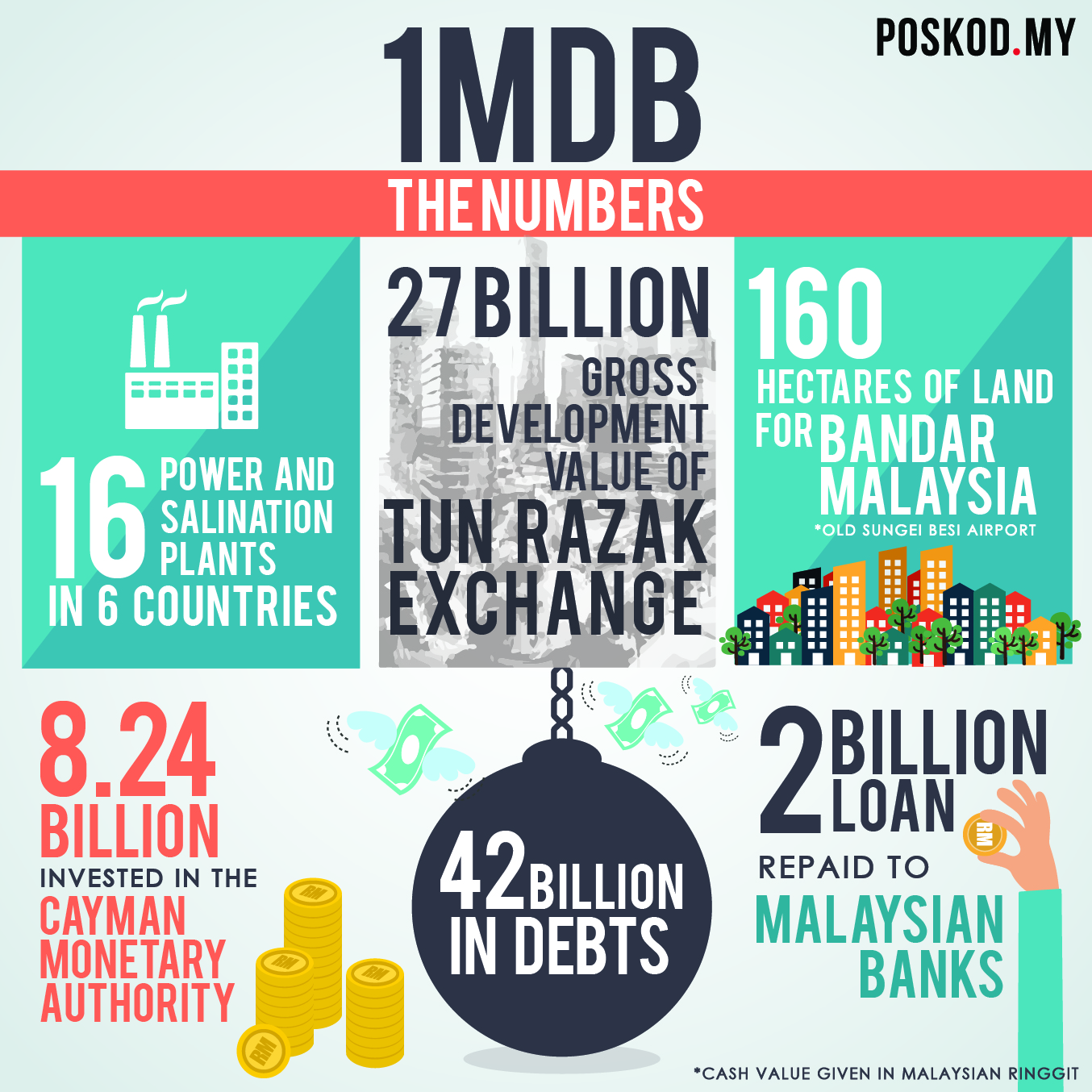
Just look at the pictorial below, all the asset movements, valuations, justifications, collaterals for loans, asset valuations, asset disposals, veracity of figures, actual audit trail of assets and cash flows, etc… ALL required the reliance on verified figures. If NO ONE CAN DEPEND on them, the whole thing breaks down!!!


a) You cannot charge hefty fees and then say “oh well, its just financials”, … because people relied on it, investors relied on it, ratings agencies relied on them, etc… 

b) If we just sign off on anything and everything WITH NO CONSEQUENCES, what kind of crap society we live in.

c) The accounting profession is a professional industry, which means, your opinion can be relied upon for making other important decisions. The hefty fees are not just to feed the bloody partners ok.

d) You cannot say “I am just an accountant”…. NO, you are the very core of approval processes, gatekeeper, and policeman of financial assets/data/cash/liabilities & their VERACITY … Decisions worth billions and billions are going to be made based on these figures (to lend, to buy, to collateralise, to sell, to invest, etc.).

e) If I know then what I know now – The defence that in light of the discovery “of new findings by DOJ etc…” now the older accounts can no longer be relied upon… does not hold up that well. DOJ was not the only one digging. Plenty of business journalists were doing the same at the time. Edge, WSJ, Sarawak Report… almost all of them were coming to the same conclusions that something is very wrong with the whole shebang then. Yes, even then.


KUALA LUMPUR, Nov 21 — Kepong MP Lim Lip Eng said action must be taken against Deloitte Malaysia for providing a falsified audit of 1Malaysia Development Berhad (1MDB) to the Public Accounts Committee (PAC).
Lim said Deloitte’s then-country managing partner Datuk Tan Theng Hooi must also be made to answer as he signed off the account on behalf of Deloitte Malaysia.
“He even came to Parliament to testify before the PAC in defence of the 1MDB account, which we now know to be untrue,” he said during a press conference at the Dewan Rakyat today.
Lim pressed the Malaysian Institute of Accountants (MIA) to finally take action against the firm over this.
The MIA previously it was investigating both Deloitte and KPMG, another former 1MDB auditor that disavowed its audit following later third-party disclosures.
“My colleague (Damansara MP) Tony Pua lodged an official complaint with the institute in 2015, but until now there has been no official reply.
“I want MIA to state clearly and immediately as to what their position is on the account audited by one of its members,” he said.
Kampar MP Thomas Su, who was also present, called Deloitte’s actions indefensible and said it was imperative that the MIA take action over the deception of Parliament and the PAC.
In 2016, Deloitte stated that its audit reports for 1MDB’s financial statement for 2013-2014 should no longer be relied upon due to new information revealed by the US Department of Justice when it filed complaints in seeking to recover over RM6.8 billion in 1MDB-linked assets.

Stop bull shitting at the Dewan Rakyat

Image result for images of two third sitting in malaysia
Deputy Minister in the Prime Minister’s Department Hanipa Maidin was bull shitting at the Dewan Rakyat when he said Two-third majority is needed to change electoral boundaries or wait for 8 years from the date of redelineation carried out under the BN administration.

Since 1986 till 2018 we had 8 redelineation and it all started when Mahathir became the 4th Prime Minister. Every election boundaries and people were moved here and there to achieve a sure win for Barisan Nasional. Two-third or not Mahathir will bull through in Parliament because all the politicians balls and vagina were squeeze very hard.

There is no difference today, it is whether Mahathir wants to do it or not.

It would be good if everyone can stop talking about Two-third when it is not in Mahathir’s vocabulary.

Malays love fucking themselves

Related image
Everyday one Malay arse hole will screw things up in public making other races laugh at them.
The promise by PH before election they will abolish NSC.
Now that the power is in their arms, they want to so called amend NSC.  
Whatever amendment in place will make sure the Prime Minister can do what he likes.
Giving such power to Mahathir is like telling him to re start Memali all over again.
In Malaysia the Malays are going mad each day by the dozen.

Yesterday a salaried girl got scolded for working as a salesgirl selling beer.
If the Malays does not want to work, do let other races work.
Why deprive others to earn a decent living.
Are the Malays encouraging other races to run wild like Mat Rempit and wait for handouts or be criminals robbing and killing innocent victims.

Next are the written Chinese sign that has to be remove.
Everyday I shake my head in disbelieve at how stupid the Malays have turn out to be.  I can ignore those low class and uneducated Malays because they did not go to school.
But the Educated ones are the worst Malays in the history of Malaysia.
Everyday they fuck themselves in public for attention.
The names of the street or road were named after those who had contributed to the development of the States or Nation, yet the Malays who have contributed nothing are jealous of those who did.  So what is wrong if written in Chinese.  There are many road signs written in Arabic and Malay yet no one complain.  Is this Saudi Arabia?

Today many like that stupid Malay minister by the name of Rani are given titles without contribution to the States or Nation.  It is people like her that makes the Malays behave and look foolish.

I believe Malaysia is the only country where people need not work or contribute Nation building are given titles.

Why do we need useless Malay to change the History of Malaysia.

I HONESTLY BELIEVE AND KNOW THAT MALAYSIA CAN ONLY DEVELOP IF ALL THOSE MALAYS WILL JUST KEEP RELIGION AND RACISM IN THEIR BEDROOM.

STOP FUCKING MALAYSIA INTO SHIT HOLE.

Why Namewee Is A Humanitarian Genius


Many of my friends were surprised when I told them that I considered Namewee a really smart, musically gifted, funny and noble guy. If you do not share this opinion, well, read on and maybe you will change your mind.

Namewee may ruffle some feathers with his antics, protest songs or even profanity. To me, I am very much like him, except for the musically gifted part.

Namewee is a lot more popular elsewhere in particular, China, taiwan, HK and Singapore than Malaysia. Malaysians again are generally uncertain or take for granted the talents we have until we are told by others outside the country. we tend to under-rate ourselves a lot.

Why “humanitarian”… he fought for most things which resulted in us having a new government, he played his part long before it was safe to do so …


His latest creation was brought on by his experience being locked up in a cell with loads of illegal Burmese migrants. The new government must find ways and implement effective rules to treat the migrants, legal or illegal, much better. 

Already I am so fed up with the ways some families treat their maids. Malaysians have a long way to go in terms of being empathetic and treating everyone as equal and with respect.

Hopefully Namewee’s video will go some way to further highlight the plight of these migrants.


Many of us may not be aware of Namewee’s achievements abroad. His biggest feather in his cap has to be the highly moving duet with Wang Lee Hom. Stranger In The North highlighted the desperate plight of the many rural folks who had to move to urban cities to eke out a better living for their families. The angry rant and rap resonated loudly with many in China.

A protest song for the present times. The disparity in incomes, the long time being separated from their loved ones, all for what…

Look at the hits, 140 million and counting … splendid for a non-Gangnam style song. The song was and is still very popular throughout all Chinese speaking nations. 


and, when he wants to be funny, he can be damn funny… below was the catchy, pun ladened Thai Love song, made into an extended video with storyline.


His Cantonese is better than my Mandarin… accented but damn funny. His pronunciation was so deliberately close to foul language. Big big hit in HK. 

Namewee is highly respected by most music celebrities in the region and has worked with many, including G.E.M., Candy Lo, Meu Ninomiya, Amoi-Amoi, etc..


There are still so many wonderful songs by Namewee. He is still way under-rated. Still misunderstood by many. 

Jack Neo was also featured in Namewee’s tribute to Jack’s comedy show and the Singapore cultural nuances. 

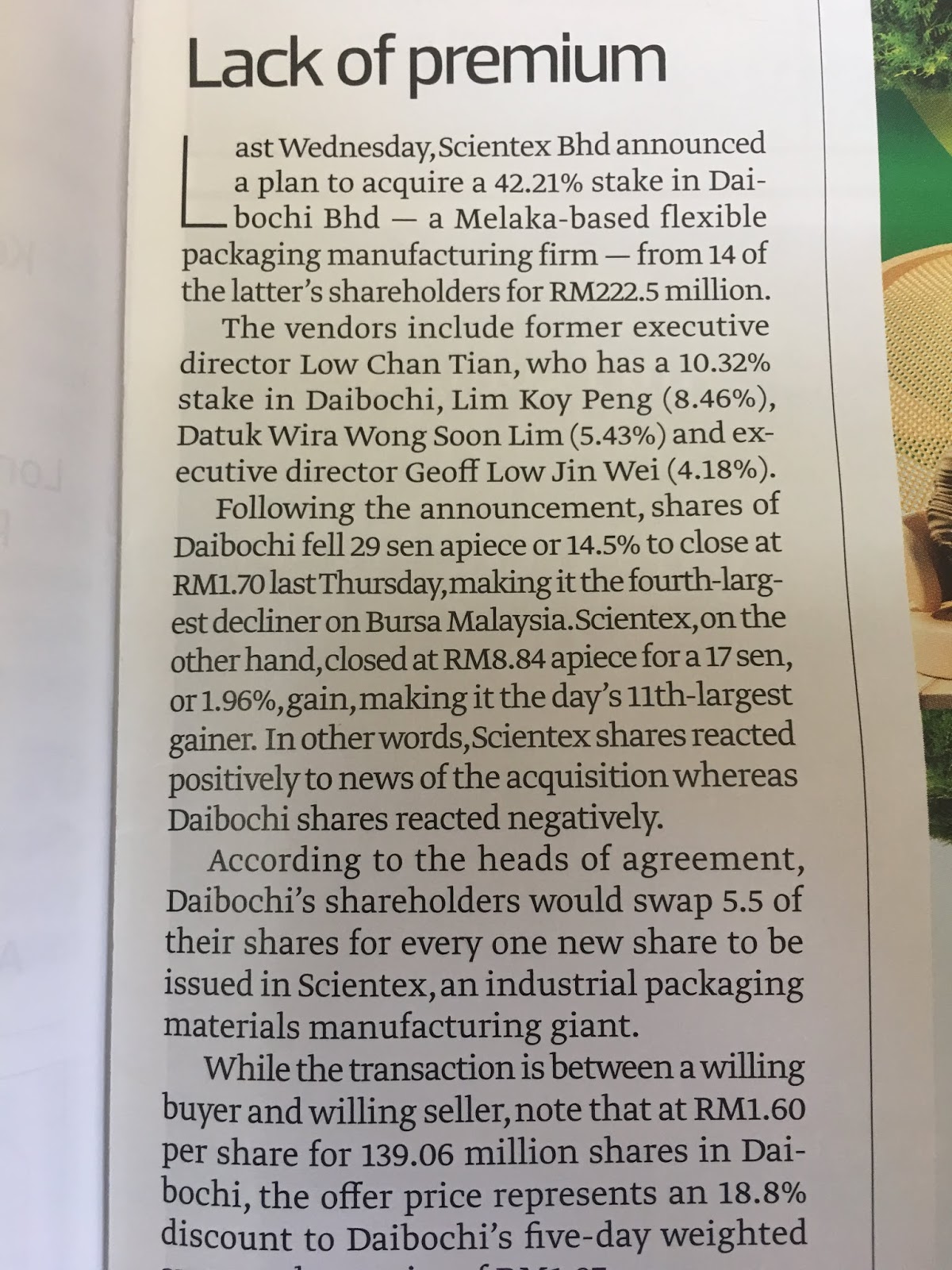
Why No Premium – Daibochi & Scientex


TheEdge Weekly asked the question: WHY NO PREMIUM

Scientex is one of the world’s largest producers of stretch films. Scientex also produces BOPP films with an annual production capacity of 60,000 tonnes. 

The company also produces cast polypropylene (CPP) and metallised films with an annual capacity of 12,000 tonnes, the biggest producer in the country. 


“This merger will enable Scientex to offer an integrated range of products to a larger client base and enhance its capabilities in the flexible packaging business through synergistic and complementary products to better serve global clientele.  Scientex also intends to maintain Daibochi’s listing status on the Main Market of Bursa Malaysia, and retain all the management and staff,”  Scientex spokeperson said.

“We believe it is good value for Scientex to acquire Daibochi on [a] PER basis, with about 20 times PER for Daibochi’s FY17 (financial year ended Dec 31, 2017) earnings, 16.5 times for FY19, and 12.3 times for FY20. Industry average PER is about 15 times excluding Tomypak Holdings Bhd.” – TA analyst

Daibochi is a leading flexible packaging provider in the South East Asian region, with manufacturing plants in Malaysia and Myanmar. 

Rationale:

1) The pricing based on current and forward PER was fair and slightly higher than the industry average.

2) Why should there be a premium??? A premium suggests that current prices were undervalued. Was Daibochi undervalued? Why should there be a premium – Daibochi’s share price could have been at RM1.20 or RM1.60 or RM1.80 when the deal is struck… at differing prices you would have called in undervalued, overvalued, etc… why base your opinion on the average price for the last 30 days. Historical prices is but one minor factor. Hence most M&A of established businesses (not startups or tech firms) would use PER or forward PER, as that will show whether the deal was PER accretive to the buying company.

3) Why there is no premium – Probably, I am guessing here, was because there were 14 shareholders in Daibochi. When you have 14 drivers in a Proton you won’t get far. Even if you have an appointed leader, it will never be as smooth or as decisive as one person with the substantial block.

4) The main key why there was no premium – Well, it is not a cash sale… it is a swap. A swap means the future fortunes of Daibochi shareholders will be in the merged entity under Scientex. They will be getting Scientex shares. There is really NOT MUCH point to do a “severe deal” for themselves as then it would weaken Scientex share price anyway (which they would be getting shares in). Just a proper arms-length deal that satisfies the regulators would do.

5) Listing Status – Part of the reason for the lack of premium was that Daibochi’s listing will be maintained. Everyone knows there is a RM20-40m premium for a Main Board counter. Scientex can sell Daibochi listing status later, which will be reflected then in higher Scientex prices, which would be what current Daibochi shareholders will be holding.

6) Control – That would be the only issue that might give rise to a premium. Losing control. But can the existing G14 move the company to the next level. Control is not everything. Malaysians have this silly over estimation of the need for control. Contro, is only important if you are mainly going to do shenanigans. Otherwise, any deal must be weighed by their accrued financials. Is 1+1 more than 2. If yes, then it is a good deal. 


The coming Economy collapse in Malaysia

Congratulations to Azmin and gang who won in the recent PKR election.

Next week will begin the Bank Run in Malaysia.
This good news is the reward for winning.

Also not to be forgotten is Mahathir and Daim who still think they are the only ones capable of running Malaysia AND FOR STEALING RM66 BILLION RECENTLY.

The next 6 months will show HOW CAPABLE MAHATHIR, DAIM AND AZMIN WILL RUIN THIS NATION MAKING 2 MILLION MALAYSIANS BANKRUPT AND WITHOUT JOBS.

BEFORE THE END OF THE 6 MONTHS, EVIDENCES WILL SHOW WHERE RM66 BILLION WENT AND THE AMOUNT OF SLUSH FUND AZMIN HAD AND WHO ARE THE PROXY. ALSO FULL DETAILS OF AZMIN ALI ACCUMULATED WEALTH FROM THE 11 YEARS ANWAR WAS IN JAIL.
******************************************

It was early October 1974.
The world economy was still suffering from the wide-spreading shocks caused by the global oil crisis that occurred a year earlier. Singapore, affected as well, posted its worst set of economic data after enjoying a double-digit growth rate since its independence in 1965. The economic uncertainty was likely one of the factors in the starting of the rumours, which spread quickly like wild fires that the financial health of the banks in Singapore had taken a big hit. Chung Khiaw Bank Limited, then part of The United Overseas Bank Limited (UOB) Group, was rumoured to have faced a severe liquidity position and could run out of money soon.
chung khiaw bank run 1974
The Incident
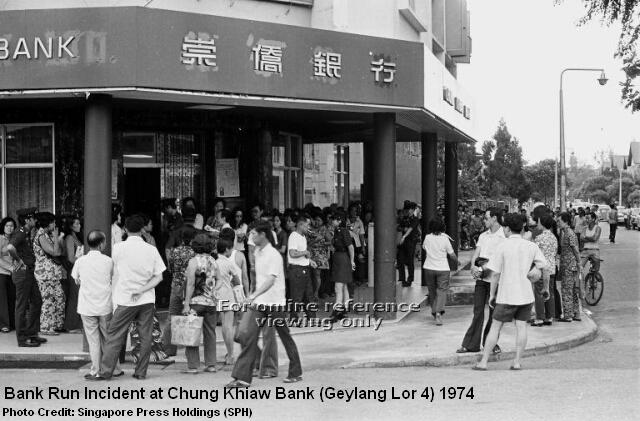
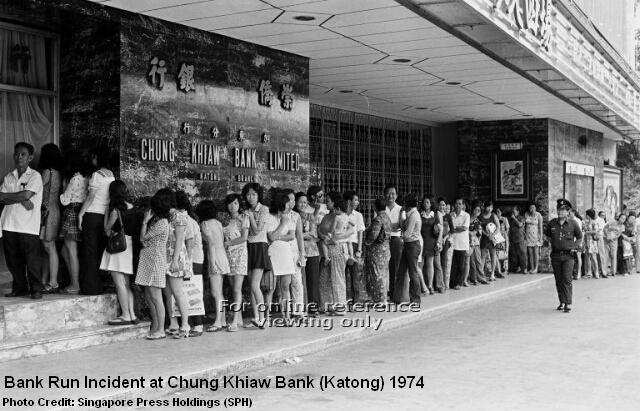
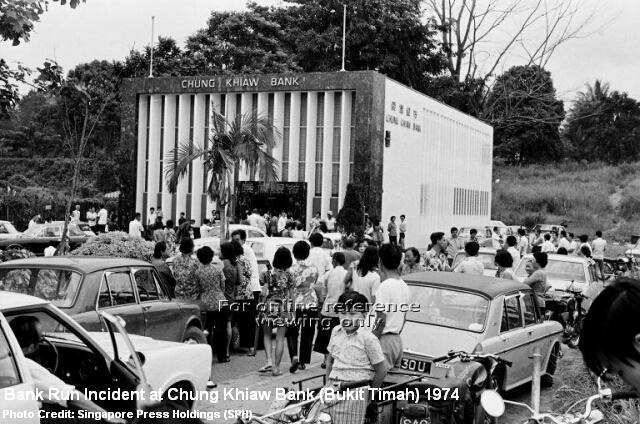
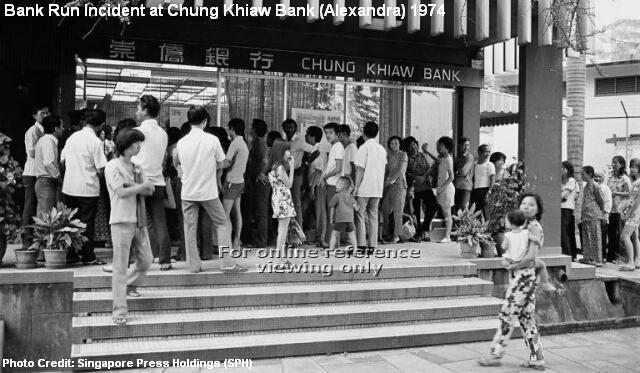
In the morning of 3rd of October, crowds began to gather outside several branches of Chung Khiaw Bank. Its branch at Geylang Lorong 24 saw long lines of queues formed. Facing the increasingly anxious crowds that were growing larger in numbers, the police had to be called in to maintain order. A number of Chung Khiaw Bank branches had to extend their opening hours beyond their normal operations between 10am and 3pm. Chung Khiaw Bank’s Jalan Kayu branch was opened until 7pm, while its Geylang branch allowed its customers to withdraw their cash until 10pm.
chung khiaw bank run geylang lorong 24 branch 1974
By 8pm, there were still 300 people outside Chung Khiaw Bank at Geylang Lorong 24. A Cisco van arrived at Geylang with more money after the branch manager requested a requisition of $3 million cash for further cash withdrawals. Bank officials had to constantly reassure the crowds not to panic but it was not until 1030pm before the last customer made his successful withdrawal of deposits.
The Reassurance
The following days saw Chung Khiaw Bank releasing an official statement, citing the positive financial health of the bank. With an excess of $700 million in the form of government securities, treasury bills and physical cash, and a healthy loan deposit ratio of 63%, the bank hoped to quash the rumours and convince the people of its strong liquidity position. The Monetary Authority of Singapore (MAS) also pledged that the UOB group of banks was safe and well-protected. After further appeals by the Association of Banks, Singapore Chinese Chamber of Commerce and the Singapore Bank Employees Union, the size of the crowds queuing up to withdraw their savings finally began to ease by the fourth day since the bank run incident started.
chung khiaw bank run katong branch 1974
The Establishment
Chung Khiaw Bank Limited was established in February 1950 by Aw Boon Haw (胡文虎, 1882-1954) to tap into the credit and loan sectors for businessmen of the smaller-scale companies. Aw Boon Haw, famous for his Tiger Balm ointment brand and Har Paw Villa, had a vast business empire ranging from traditional medicine and gold mining to banks and newspapers. He was also a generous philanthropist who had donated millions to charity causes.
chung khiaw bank run bukit timah branch 1974
Ahead of its times, Chung Khiaw Bank was fast growing and innovative in ways and services to increase its market share in the banking sector. It managed to report a fixed asset of nearly $35 million just five years after its establishment. In 1956, it launched the “mobile bank” scheme, where its vans were deployed to different parts of Singapore to bring banking services to those in need. A valet service was also introduced at its head office at Robinson Road, so that car owners visiting the bank would not be hindered by the limited parking lots.
In the sixties, the bank rolled out their coins “piggy” banks, in shapes of different animals such as pigs, rhinos and kangaroos, which proved extremely popular among the kids. Its strategy to reach out and woo the common folks and child depositors reaped spectacular results, earning the bank with a reputation of being a “small man’s bank”. By 1970, Chung Khiaw Bank had opened as many as 32 branches in Singapore; the latest were at Toa Payoh and High Street.
chung khiaw bank run alexandra branch 1974
The Acquisition
UOB, established since 1935, remained a relatively small player in the Asia Pacific region after Singapore’s independence. After achieving its public listing on the Singapore and Malaysian stock exchanges in 1970, UOB proceeded with a series of aggressive acquisitions. Chung Khiaw Bank was its first target. A stake in Chung Khiaw Bank was acquired in June 1971, but it would take 16 years before UOB was able to buy up all of the shares in Chung Khiaw Bank and take full control. By 1999, the brand of Chung Khiaw finally ceased to exist when its operations in Singapore, Malaysia and Hong Kong were merged into UOB.
UOB went on to acquire other local banks: Lee Wah Bank (in 1973), Far Eastern Bank (1984), Singapore’s Industrial & Commercial Bank (1987) and Overseas Union Bank (2003). Today, it is part of Singapore’s “Big Three” banks, along with DBS (The Development Bank of Singapore Limited) and OCBC (The Overseas-Chinese Banking Corporation Limited)
Published: 22 April 2014

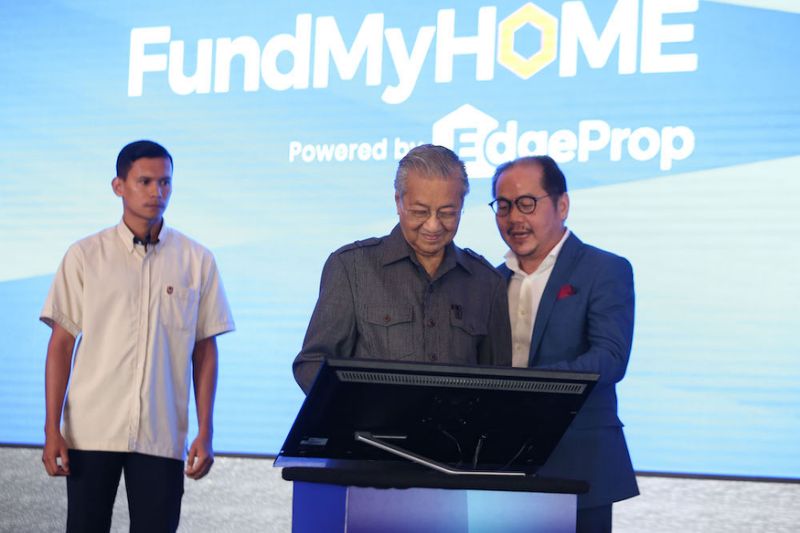
Assessing "FundMyHome" Concept


Let me say that I think the concept has a lot more merits than the current ‘reception’ is willing to give it. I am not aligned with anyone or any company dealing with this business segment.


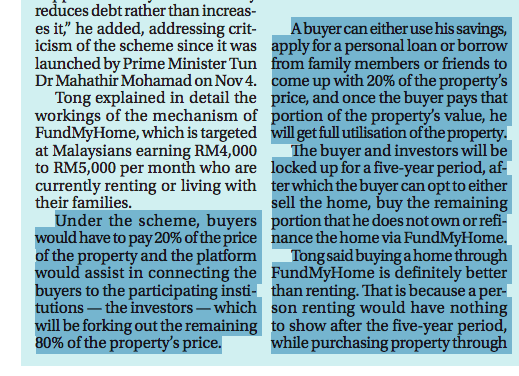
It is very important to note the group of people that the concept is targeting: FIRST HOME BUYERS. More specifically, first home buyers who are having problems buying the said property. It is not for anyone else.


Issues that I have against the concept:


a) Tough for the funders – The 5 year lockup period will actually stave off speculation or that the funders side will get a hefty return on their investment at the expense of first home buyers. In fact, in there is no interest paid to funders, its actually quite a sad deal for the funders.

The funders pay 80% of the property, for what? For a maybe/potentially/ yes-no 20% gain after 5 years. If you put your own funds in a savings account, 12-month automatic rollover, you could get 3% compounded over 5 years = 15.9%. Hence 20% versus 15.9% is nothing to shout about.

Even if you compound it at 2.5% over 5 years = 11.3%. The 20% return is not guaranteed. Funding the project also means you have to take a view on the local property market.

Developers do not get 100% of purchase price but rather just 80%. The 20% is granted to developers only if the property rises above the purchase price at the end of 5 years. Otherwise the 20% will be earning a 5% p.a. and used to protect the downside for investors.


b) Saving the developers – We know we have a lot, a bloody lot of properties that are unsold. If nothing is done, the markets will unwind itself eventually – either developer keep dropping prices till it reaches real affordability levels, or it keeps the properties on their books till the sentiment recovers or the cows come home (bankruptcy). 

The latter has the consequence of suppressing the rest of the property market in terms of prices. The sad fact is that too many Malaysian households have taken on hefty property mortgages. In a flattish or slowdown market, these households will have to crimp their spending or even sell additional properties at a loss.

The Fund My Home project will “save” many developers from “losses” as cited above or eat into their capital for having to keep the properties on their books.

They have overbuilt for sure, they have overestimated the demand and affordability, and in a neutral stance, they have to bear the downtrend and their business mistakes.

While the Fund my Home project has a lot of merits, I do not wish to see first time home buyers being too eager to snap up “substandard” properties that developers cannot sell. To a certain extent, that concern has been mitigated by the “screening process” by TheEdge team. Not all properties will be permitted on the platform.

Why protect the buyer and not the seller? Because we are not here to save the developers. As a matter of fact, we are already helping the developers to sell properties that they themselves CANNOT sell. Hence the developers should not be looking at normal profit margins (judging from the fact they made so many business mistakes such as overbuilding, overestimating demand, etc.). 

The bulk of pain has to be shouldered by the property developers, as explained above.


c) What if the buyer defaults – The developer is supposed to take back only 80% of the property price at the beginning. The remaining 20% will be kept as minimal returns for investors in the home. Hence the funders are protected even if the property were to lose 20% of its value at the end of 5 years.  

However, say within that 5 years the buyer lost his/her job and the property at the end of 5 years has a market price that is 40% below the initial entry price for the buyer? The buyer basically is bankrupt now, so at 40% loss, no party will want to sell into the market. Who bears the additional 20% losses?

d) EPF Account B – Currently Account B takes up 30% of our contributions. I assume first home buyers will be drawing down from Account B to help with the initial 20% payment. I think the government can make the exception for first home buyer to take out the full Account B plus an additional 20% from Account A (if required) for the project. Seriously, its the 20% payment that will be the biggest hurdle. Plus the same person is building equity and not speculating. Same as before, if they were to sell the property, they will have to put back the same sum back to their EPF account.


THE BENEFITS

a) First time home buyers can almost forget about owning a home on a RM4k-5k salary. Hence FundMyHome should be weighed AGAINST the alternative of renting. I need not do a Renting vs owning 101 course here to highlight the miniscule difference to participating in the program vs renting. Or do I?

Say you cannot afford the 20% down payment but you have a salary of RM4,000. The platform will help to try secure a RM100k personal loan. Say the interest payment is 7%. The person would be paying interest RM7,000 a year = RM583 a month. Assuming nothing changes, RM583 in rent cannot even get you a room at Choo Cheng Kay flats. But the family gets a house/unit all their own now.

Even if at the end of 5 years, you decide not to take up up the remainder, you can still sell your 20%, assuming market was flat, and get out. But you got a silly RM375 rental a month for a nice home for 5 years.


b) Catch up – The worst thing for first home buyers is not being to catch up to the property prices. Imagine waiting for your household income to jump from RM5k to RM10k a month. Maybe it will take 5 years but where will property prices be then. Your RM400,000 unit may now be at RM550,000.

You can do the math yourself that you have bought insurance for your affordability. Giving up the initial 20% is not such a big deal, as I have explained that the funder’s side have their risks and rewards to be weighed out as well. In this case you are giving up RM80,000 gains and could refinance for the whole unit/house for RM400,000 – RM80,000 (initial payment) + RM80,000 (funders’ returns) = RM400,000. 

You will be financing a mortgage of RM400,000 at the end of 5 years for a property that is worth RM550,000. Giving you an equity of RM150,000 already.


c) EPF Account B – After 5 years, the same person with RM4k salary, assuming no increase, would have saved 11% +13% (contribution) = 24% of RM4,000 x 12 x 5 = RM57,600. Thirty percent would have gone to Account B for housing = RM17,280. That amount could be used to pay down further or refinance purposes. 

We should allow another 20% from Account A for this purpose, which would have made for a total of RM28,800 at his disposal. 


MY VIEW

Overall a brilliant idea that tries to balance the risk-return for the interested parties. 

 If the team stay vigilant on the screening process of properties allowed to be on the platform – this will succeed wildly. This proposal should get full support from the government, and property developers should be thankful. Those making noises are those overpricing their substandard properties and probably lamenting why they cannot get on the platform.

Design a site like this with WordPress.com
Get started