China Evergrande – A Precursor & Harbinger Of Calamity For China Property Markets
If you just brush aside the latest news on Evergrande, you are actually missing the headline for a future newspaper article – China Property Companies Crashed! The news is so smacked right in your face that it is too obvious to not to notice that the emperor is naked… heck, the whole parade, and procession are naked.
In the first half of the year it generated $44bn of revenues and $4.5bn of profits, paying out half in dividends. It has $98bn of debt, $44bn of it due within the next twelve months.
Any first-year business and accounting student can tell you it is highly unsustainable. $4.5bn profits and you pay out half in dividends. The amazing thing is that for 1H2018, it paid out $4.2bn in interest payments!!! If it had no debt, net profits would have doubled.
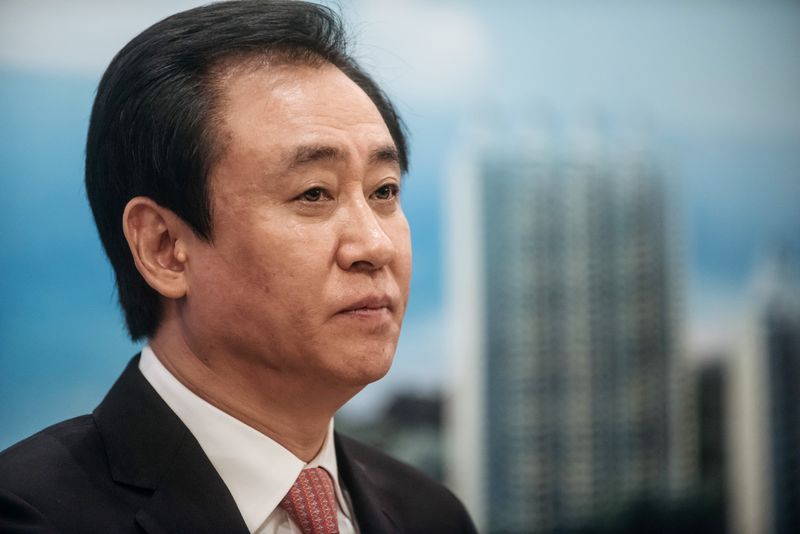
(owner, Hui Ka Yan)
Assuming you do the same for the second half of 2018, you have $4.5bn to cover the $44bn due over the next 12 months. That’s provided the $4.5bn is real net positive cash flow and not gains on revaluation of assets.
The key here was that Evergrande has recorded NEGATIVE CASH FLOW every year since 2010!!! Every bloody year. It has been running on fumes. As long as property markets there remain speculative and robust, the fumes will not be so toxic… but…
So what triggered the calamitous view? Read below:
The owner, Hui Ka Yan, had to put in $1.8bn of his own money to subscribe to the new company fund rasing bond. The coupon rates were 11%-13% p.a. … where on earth do you get a company bond with that coupon rate??? I mean, one of the largest listed stock in China/HK.
It means, no banks want to lend any more, they have maxed out usual suspects for fundraising. Look at their net profit ratio to revenue, they barely make 10%. That would not be sufficient to pay the coupon rate even.
Why Care About Evergrande
– It is the largest China property company by revenue.
– It is also the most indebted developer there.
– It still has a market capitalization of $30bn, the potential domino effect should it fail will be catastrophic.
– An implosion of the country’s largest developer will see a lot of its property holdings for investments being sold, which will further flood the marketplace. Any signs of weakness in the leader will further exacerbate other property developers in terms of their borrowing cost.
– We may see a “who can get out fastest” among the developers soon.
Recently it has been borrowing more from China’s trust companies: its loans from those quarters jumped 63% last year to $42 billion. That move showed that the company may be running out of “the usual options” for refinancing. It also shows that Beijing is aware of the importance of Evergrande, and cannot let it fail. Sounds familiar – too big to fail.
Strategy, Views, Opinions… & Catalysts
One can have a view that a certain market is overvalued or overpriced, or vice-versa. That does not become actionable unless we have a sense of timing involved because if you are bearish or bullish long enough, BOTH will eventually be right.
Key then is to note the catalysts, and to me Evergrande has just provided the biggest bullet… excessively high coupon rate with $44bn due over the next 12 months.
Battling Shorts
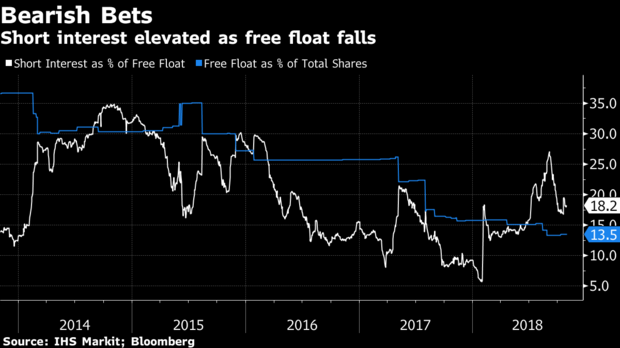
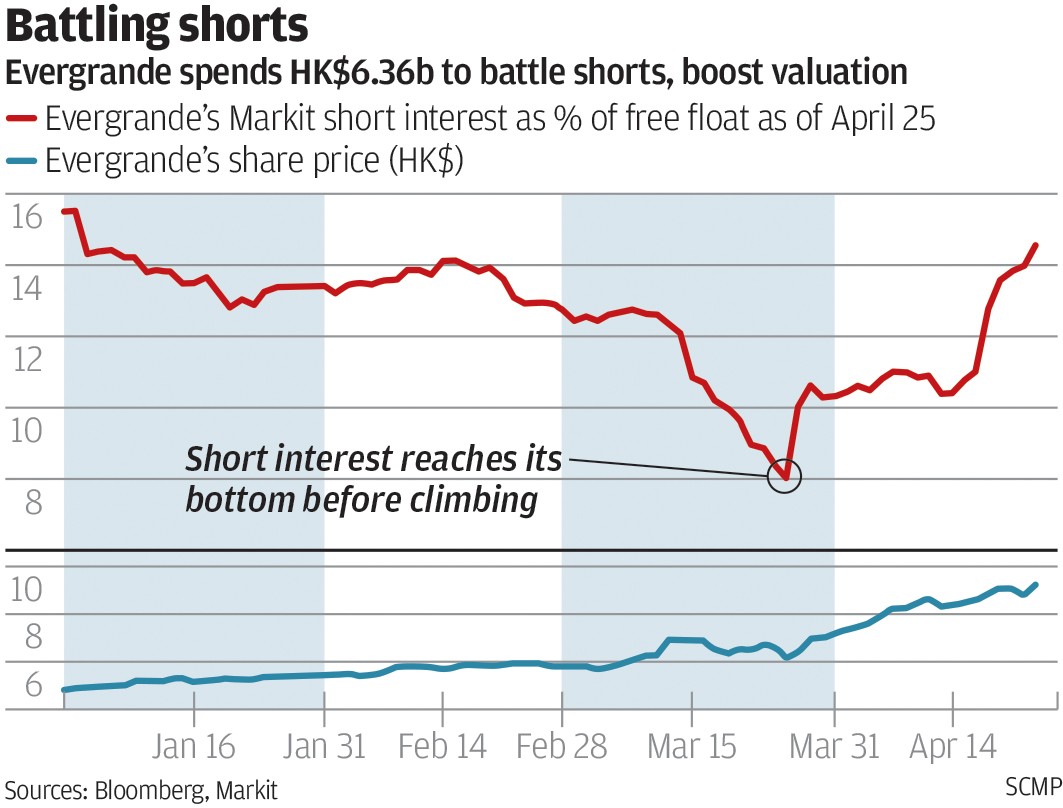
It is also the most shorted stock in HK, almost 18% being shorted. The owner has been very combative, engineering sudden share buyback to squeeze the shorts. You cannot squeeze the shorts forever if your balance sheet and cash flow have problems.
Trouble is, the funds you raised will somehow go to more share buybacks to battle the shorts, instead of actually paying down loans. You do the math, something’s gotta give…
Hopeful Saving Grace
– If the trade war ended completely, then Evergrande may have a chance to survive the next 12 months. Otherwise, its implosion possible at the cinemas.
Why EPF So Good Ah?
The study by the World Bank was timely (I will explain later). Being a government led pension fund puts EPF squarely against other similar funds by other countries. I must say that EPF has been punching above its weight for the longest time.
The Future Challenges
However, we need to know why EPF did well, or else we will not be able to replicate the past performances. I think its critical that EPF, having done wonderfully, has to reposition and re-strategize because it has gotten too big for certain assets that it has invested heavily in the past.
EPF will also have to contend with how much more inter-related and correlated global markets is nowadays and will continue to be even more so in the future (thanks to the proliferation of ETFs and indexing).
As good as EPF has been, we have to be cognizant of the fact that Malaysia is still a place where there are not a lot of safety nets (e.g. reasonable life term pension scheme, unemployment benefits, free medical, free university education, etc. … basically, programs that protect their citizens from economic shocks and natural disasters).
Just looking at the average savings would reveal the first problem – insufficient amount to retire). The second statistic, which is less than half the population actually has an EPF account, is just as alarming. To be clear, both issues are not under the purview of EPF and its management, but rather on the government’s blueprint going forward.
EPF Stats
As at the end-2016 total funds managed by EPF was RM731.1b. As for the end of June 2018 it stood at RM814.3b. EPF is the second largest pension fund in the world among developing countries. The fifth largest in Asia and 15th globally. To put into better perspective, Malaysia is number 66th globally in nominal GDP per capita. In terms of working population size, Malaysia is ranked at 36th position globally.
Success Factors for EPF
Show the above chart to all CPF holders, they will cry. The study by World Bank confirmed that the “success of EPF” was due to:
a) an astute team that developed in-house expertise over the years to make sound large-scale investments over multiple asset classes,
b) strong governance structure – one that is independent and transparent, and free from interference from the ruling government of the day (although the last bit may be open for interpretation on its absoluteness).
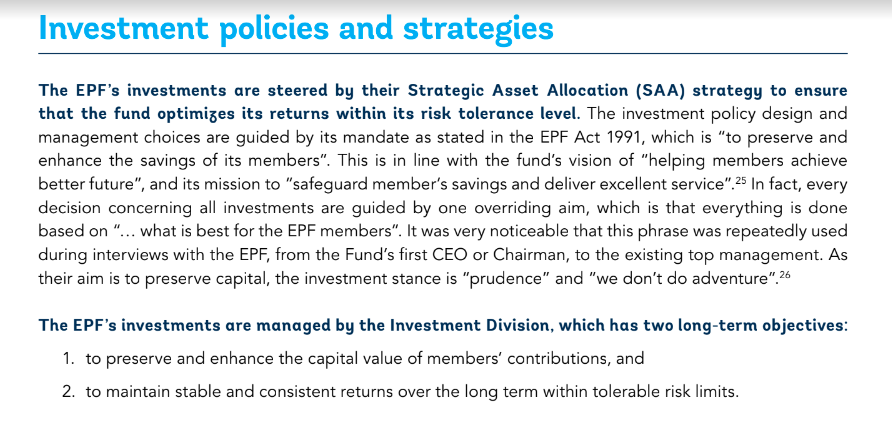
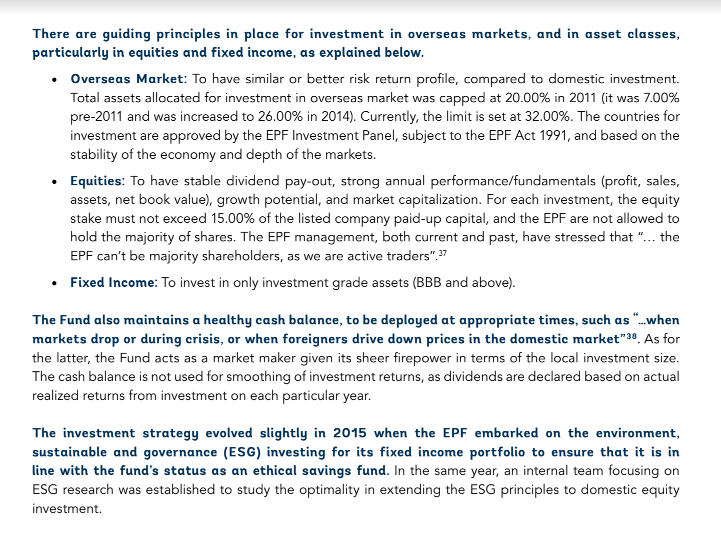
The above excerpt is very important. It shows that EPF is very much aware of the ballooning size of funds under management and the need to tweak exposure to certain assets. This is to ensure that EPF does not turn from an investor to a substantive/critical investor in that asset class. The danger of that is that it could distort the market prices, and worse, artificially influence the price.
Another feather in the cap is that the cost to manage the funds stands at just 0.26%, almost the average cost of ETFs or indexing. Believe you me, that is a great achievement. On a side note, we still need some deep restructuring to the local unit trust and funds management industry. No investor should be made to pay more than 1% or even 1.5% to invest, period. The current practice is ridiculous and eats at short and long-term investment returns substantially.
If you have ever needed to deal with EPF, its a breeze. It is easily the best-managed government-linked unit in terms of customer service. When it is solid at the top, it transpires to every facet of the company. The same argument can be made with other inefficient and slow government departments when dealing with the public.
I have written often on how wonderful EPF has been, how most of us take for granted the 6%-7% annoual returns for a fund of that size:
https://malaysiafinance.blogspot.com/2018/02/epf-returns-pictureworks-nabs-ocean.html
The Future Challenges II
a) Size per asset class – The Malaysian equity market has been taken up by more and more local funds, esp over the last 10 years. EPF would have been aware of such developments, and wisely, has upped its overseas equity investment side. Nonetheless, we have to careful how “fairly valued” are local equities moving forward. If the bulk of local funds hold substantive stakes in key index component stocks, it could be easy to “manage or maintain” prices regardless of the fundamentals of the said stock. Call it a crowding out effect, call it by any name, it is a big issue.
b) Inter-related/Correlated Investing – The world’s investing paradigm has shifted over the past few years with the rise and rise of ETFs and indexing.
https://malaysiafinance.blogspot.com/2018/08/the-future-for-equity-funds.html
The bulk of my arguments lead to the age of normalized returns, the age of reduced alpha and the need to concentrate more on small caps.
c) Safety nets/only half of the working population has an EPF account/ average sum of savings not sufficient for retirement – These 3 issues are not EPF’s problem but the ruling government. Take note.
Malaysians did not vote for another UMNO, Mahathir should step down immediately

UMAR MUKHTAR
Mahathir legacy with his latest blockbuster
With RM66 billion as loose change Azmin Ali is over confidence he can control PKR.
Meanwhile Mahathir has his side kick romping in MPs from UMNO, PKR, PAS and Sabah. Another Malay culture that must change in New Malaysia.
Bersatu is confidence that they will secure 55 MPs next month, so who in PKR will be jumping?
The frogs have asked for RM50 – RM100 million each. Vincent Tan, YTL, Country Heights and Genting are main sponsors
So will Anwar or the Bersatu member be the 8th Prime Minister?
There will be a cabinet reshuffle within 6 months as indicated by Mahathir.
Mahathir will as usual kick out his Deputy and how will Anwar react to this knowing Azmin holds the trump card?
Why watch Korean drama or Indian movie when Mahathir is making his own drama in Malaysia.
The story writer is ready, technician are ready, director and producer are ready. All waiting for Azmin Ali and Zuraida arrival in a golden chariot.
There is a saying WHEN DAIM IS QUIET, THE OIL IS HEATING AT HIGH HEAT.
WHOSE DESTINY ENDS IN 2018????????????????
The Real War Behind The Trade War
Well, the main reason we have the trade war now is Trump, whom I am trying very hard to describe without using foul language. However, it is not a deficit issue that is driving the trade war. In my view, the trade war is the result of four main issues, which will be elaborated later.
Being the reserve currency, it will be naturally strong. Being naturally and unnaturally strong will inevitably lead to trade surpluses (ceteris paribus). Unless the Federal Reserve practice tight monetary policies the same way as Paul Volcker, the “balance sheet” will get out of whack. That leads to whether China purposely weakens the yuan to exacerbate the trade gap.
Maybe China does but even so, it is insufficient to justify the gap. China is a developing nation with hordes of people becoming middle class from rural class – it is thus necessary to stay competitive to build up every sector of the economy.
a) The Strategic Asset Acquisitions By China – Beijing does not mind registering huge surpluses (even if it meant higher import prices for consumers) as it has been diverting the surpluses via state funds or state link companies to acquire strategic foreign assets. To Beijing, its ok for the USA to keep its reserve currency status and keep them binging on goods and services because Beijing will end up owning substantive strategic lumps of fixed assets and proven global technology players (supply chain) throughout the world in another 10-20 years.
The One Belt One Road policy, grand in its mission, is now being regarded as “suspicious” and “unnecessary” to some extent by many under-developed and smaller developing nations. Many countries have taken on huge long-term debt from China to proceed with the said projects and some have quickly turned into disasters.
Hence to a certain extent, Trump is aware of the rise and rise of Beijing, and one sure way is to bring down the trade gap.
b) The Approval Blockade – The trade war can be traced back to an increasingly combative USA, thanks to the confrontational, naive, inherently suspicious, shoot from the hip Trump. Back in August 1st, the US Congress approved granting sweeping powers to the Committee on Foreign Investment (CFIUS). CFIUS now can review deals that involve a change of control of an American company PLUS those which is acquiring any influence. The wide-ranging definition of influence lends CFIUS a lot of leeways to kill deals, and it has done so swiftly.
The EU has done a similar thing albeit smaller scale. Back in May, the EU voted to introduce a screening framework for foreign investment that allows the bloc to overrule a member’s state interests. Many saw that as an effort to better protect strategic European assets.
The nationalistic fervor permeating throughout the world all point their fingers to largely China.
If you remember how Trump blocked Broadcom’s takeover bid for Qualcomm, even though both were ‘largely’ American companies. The probable fear for the deal was maybe the CEO/owner of Broadcom was a Malaysian Chinese?
A few months later when Qualcomm wanted to acquire NXP from the Netherlands, it was nixed by Beijing. Was that a tit for tat? Was that to show Trump that Qualcomm was not under Beijing’s influence? Anyhow, its Qualcomm that got squashed in the middle for both decent M&A deals.
In August Germany blocked a takeover of machine tool manufacturer Leifield Metal Spinning AG by a Chinese investor. The first time a deal was blocked based on national security justification.
c) The Patents & Technology Royalties War – This has been allowed to fester for too long. China has been blocking the biggest web companies from operating in China on the guise that it needs to filter things. Partially true, as it also helps them to nurture local giants (Tencent, Alibaba, Xiaomi, Huawei, etc…) that now compete globally as well.
Beijing has been sorely lacking (decidedly on purpose) in enforcing patents enforcement and its regulation, leaving most overseas patent holders unable to extract proper payments from Chinese companies.
d) The Spying Scandal – This was not widely reported. Only via investigative journalism by Bloomberg Business Week, do we have a clearer picture of what happened and its ramifications.
In 2015 Amazon bought Elemental Technologies, a company that can compress massive video files and reformatting them for different devices. Elemental’s product was so good it managed to get projects that can communicate with International Spaces Station, and funnel drone footage to CIA.
To do that, Elemental need supercomputers and the best around was Supermicro a USA based company owned by a Taiwanese American couple. Supermicro is also the world’s biggest supplier of server motherboards.
An independent third party audit revealed that a tiny microchip (like a grain of rice) which wasn’t part of the original design. That chip had been inserted at factories run by manufacturing subcontractors in China. That chip would have made it easy to gain access, bypassing passwords and stealing encryption keys.
Beijing has denied involvement. This was discovered during Obama’s tenure and a softer approach had been taken to resolve the debacle. Once Trump was in the office and upon his discovery of the matter, well… all hell broke loose.
Resolution: None in sight. Trump will continue to be belligerent. Even though China is bearing much of the brunt of it, it cannot back down against USA, not with Xi Jinpeng trying to hold the fort.
Trump could very well come under enormous pressure should the mid-term November elections turned against the Republicans. That may pave the way for an impeachment.
Failing that, and Trump manages to stay afloat… Beijing will have to offer concessions on patent and royalty payments to get the ball rolling.
Gobind Singh or Mahathir now wants Estonian blockchain technology

What is blockchain technology and how is it related to e-Estonia?
Blockchain is a mathematically ensured cyber security technology for rapid and immutable identification of modifications in digital data and intelligent devices.
Blockchain technology makes it possible to discover any and all changes made to digital data, no matter how small, no matter by whom, immediately and with zero error.
Although blockchain has only become hot topic in recent years, Estonia started testing the technology already in 2008 – even before the Bitcoin white-paper that first coined the term “blockchain”, was published. At that time, in Estonia we were calling this technology “hash-linked time-stamping”.
Since 2012, blockchain has been in production use in Estonia to protect national data, e-services and smart devices both in the public and private sector.
How does blockchain work?
One way to look at the blockchain technology is to view it as a “digital defence dust” that covers all the data and smart devices that need to be protected from corruption and misuse.
• Every change in data can be instantly detected based on traces left in the pattern of the “digital defence dust” that covers the data
• Blocks of “digital defence dust” are connected to each other and make up a chain that is distributed in millions of computers all over the word, which makes it impossible to change data so that nobody knows – the chain instantly reflects all changes that mismatch the mathematical code in the chain This way millions of lives and resources are saved, while the potential manipulation of sensitive data (such as health data, intelligence information, legislation related records, etc.) or smart devices (such as military machinery, hospital equipment, intelligent cars etc.) is prevented or instantly detected.
One can compare the idea of the blockchain to the NATO allies in Estonia – while the NATO allies are not actively holding back invaders on a daily basis, they are most certainly acting as a deterrent against any potential threats.
How is blockchain used in e-Estonia?
Although blockchain has only become hot technology in recent years, Estonia has been testing the blockchain technology since 2008. Since 2012, blockchain has been in production use in Estonia’s data registries, such as the national health, judicial, legislative, security and commercial code systems, with plans to extend its use to other spheres such as personal medicine, cybersecurity and data embassies.
Why should blockchain technology be trusted?
No data is ever stored on a Blockchain – instead blockchain works like a speed camera that detects who has violated the law, when and how. Due to the fact that data, protected by blockchain technology, is covered with the “digital defence dust”, every change in the data can be detected because it leaves a trace in the pattern.
The particular blockchain technology used by Estonia – KSI Blockchain by Guardtime – has been proven to work and is today even used by NATO and US Department of Defense.
What makes blockchain technology so special?
The blockchain technology used in Estonia is different from mainstream blockchains due to its scalability. This means that even large amounts of data can be covered with “digital defence dust”, since the parts of the dust (blocks) are connected to each other using a mathematically verifiable code that connects the blocks into a chain, which cannot be changed without leaving a trace behind.
What is the difference between blockchain and Bitcoin?
“Blockchain” and “Bitcoin” are two separate terms and should not be confused. While blockchain is a technological concept, Bitcoin is one of the use cases for a particular type of a blockchain technology.
Estonian government started testing blockchain technology for ensuring the integrity of the government e-services in 2008 – 6 months before Bitcoin was launched as a type of unregulated digital currency. It is important to keep in mind that even though both, Estonian public e-services and international unregulated digital currencies such as Bitcoin are covered with “digital defence dust”, the value of the digital currency may vary (increase or decrease), whereas the value of the data covered with “digital defence dust” does not change and this very fact makes the data even more valuable.
Who controls blockchain?
The chain of blocks of “digital defence dust” (aka blockchain) reaches a great number of computers all over the world, and can therefore be controlled and verified by great number of parties.
The blockchain is, after all, just an internet-hosted network which stores information as a shared database.
That means the information isn’t stored in a single location and no centralised version exists for a hacker to corrupt, making it safe to use.
Some blockchain vendors – like Guardtime, a company behind the KSI blockchain used by Estonia – have gone even beyond that, and publish the blockchain also in the physical media, like the Financial Times newspaper.
If someone would want to manipulate the KSI blockchain without anyone noticing, they would not only have to deal with the “digital defence dust” in the electronic domain, but also replace tens of thousands of copies of newspapers in the world’s libraries.
It is clear that no-one – not even Guardtime itself – is able to do that, and therefore the data on the blockchain can be considered immutable.
As a result, while it today takes on average about 7 months to discover the breach or misuse of an organisation’s data, the blockchain helps to discover such threats instantly.
For example, cases like Snowden would never have happened if the NSA had been using blockchain technology like in Estonia.
It is important to point out that although blockchain may not prevent the crime itself, it is 100% effective in detecting it.
Blockchain-based cryptomoney frauds are common.
So how can a state trust and use blockchain to protect the private data of its citizens?
When dealing with any sensitive data, it is obvious that this data should not be kept on the blockchain – after all, blockchain relies on a large number of eyes to keep it secure!
Instead, in order to secure sensitive data, what is kept on the blockchain are the “hash values” – essentially digital fingerprints of the original data. Just like your own fingerprints uniquely represent you, but don’t tell anything about your race, eye color or thoughts, the same applies to digital fingerprints – while uniquely representing the original data, it is impossible to know anything about the data itself based on the “hash values”.
Therefore – it does not matter if anyone gets their hands on the blockchain – there is absolutely no original data there to be compromised!
Can you provide any examples of blockchain technology actually being useful in protecting important the data of some state or important company?
• Millions of lives and resources are saved as the potential manipulation of defence data or smart war machines is prevented using blockchain technology.
• In order to keep health information completely secure and at the same time accessible to authorised individuals, the electronic ID-card system used by the Estonian e-Health Record uses blockchain technology to ensure data integrity and mitigate internal threats to the data. In this way every occurrence of data use and misuse is detectable and major damages to a person’s health can be prevented (such as the wrong medicine or the wrong dose).
• The Estonian KSI Blockchain technology protects Estonian e-services such as the e-Health Record, e-Prescription database, e-Law and e-Court systems, e-Police data, e-Banking , e-Business Register and e-Land Registry.
• The same KSI Blockchain technology is used by the NATO Cooperative Cyber Defence Centre of Excellence, European Union IT Agency, US Defence Department and also by Lockheed Martin, Ericsson and others.
What happens if a blockchain company goes bankrupt, how is data protection assured then?
The company itself can NEVER see the actual data that is protected, it only provides the “digital defence dust” solution that can ensure its integrity and mitigate internal threats. So nothing happens when a blockchain company disappears, all the data protected will remain verifiable for its integrity for forever based on the shared blockchain, and if applicable for a particular blockchain technology, also based on the physical publication of the blockchain in the world’s newspapers.
How does blockchain technology contribute to the well-being of a layman?
Blockchain technology helps to ensure that data concerning the person is not misused. For example:
• blockchain technology helps detect who looks at a person’s digital health data and changes it and when;
• blockchain technology helps to see when information about a company in the e-Business Register was changed and why;
• blockchain technology helps to detect who changed data about real estate in the e-Land register or statements documented in the e-Court system as well as when and how;
• blockchain technology helps to ensure that no one has manipulated smart devices such as intelligent transportation or smart war machines that could become life-threatening.
How quickly can the misuse of data be detected using blockchain technology?
According to the research by FireEye, one of the leading cyber security vendors in the world today, it currently takes organizations on average of about 7 months to detect breaches and manipulations of electronic data.
With blockchain solution like the one Estonia is using, these breaches and manipulations can be detected immediately.
https://www.thestar.com.my/news/nation/2018/10/12/a-national-
digital-id-for-all-gobind-plans-in-the-works-to-ease-verification-and-fight-fraud/
http://www.thesundaily.my/news/2018/10/12/malaysia-must-build-efficient-e-commerce-infrastructure-and-system-gobind
www.malaymail.com/s/1681816/putrajaya-mulling-digital-id-for-online-businesses-says-minister
HOW MUCH THOUGHTS AND RESEARCH HAVE BEEN DONE ON ESTONIAN BLOCKCHAIN TECHNOLOGY?
ARE WE GOING BACK TO UMNO STYLE OF ‘DO FIRST AND REGRET LATER.’
WHO AND WHICH COMPANY GOING TO MONOPOLIZE THIS?
MALAYSIANS MUST REMEMBER ESTONIAN BLOCKCHAIN TECHNOLOGY CAN WIPE OFF OUR PRIVACY AND CONTROL US FOR LIFE.
DO WE WANT THAT?
Why Capital Gains Tax Should Not Be Implemented
I have to reiterate why a Capital Gains Tax is a very bad idea for Malaysia.
Unique traits of Malaysia:
a) Very open economy
b) Ringgit has been weak, which actually has helped plenty of exporters but they are being very quiet about it
c) There are very very few safety nets for Malaysians unlike many developed countries, which means we should not overly burden the lower income group
d) We have a very simple tax code, let’s not complicate it as its a major plus point for FDI
e) Our stock market has the largest portion of GDP that is listed compared to all the rest of the bourses in the world, that implies that it has a very high multiplier effect for the rest of the economy. Hence efforts must be made to preserve its vibrancy.
Capital Gains Tax – Categorically no. The entrepreneurial spirit Malaysia is so proud of should never be curtailed, not even with a small capital gains tax. Being an open economy, we must allow the economy to function as freely as it can. This goes back to the (e) factor cited above.
... in the USA if you sell a stock, you pay 15% (20% for high earners) of any profits you made over the time you held the stock. Those profits are known as capital gains, and the tax is called the capital gains tax. One exception: If you hold a stock for less than a year before you sell it, you’ll have to pay your regular income tax rate on the gain – a rate that’s higher than the capital gains tax. My gripe is that is you have capital gains tax, then you must also have loss deduction on taxable income … but that only benefits people with income, what about those with no income (retirees). Please note that the local bourse has one of the highest retail market participation in the world.
The ramifications:
1) A huge amount of liquidity will be sucked out of the system. It will probably take at least 3-5 years for the market participants to get used to the CGT regime.
2) Might be a zero-sum game – You cannot have CGT without a corresponding reduction to taxable income when investors register losses. Who is to say you will get more WINNERS than LOSERS.
3) Cumbersome to report for tax returns and calculations. Do you withhold gains or do we have to save them for year-end? We already can see the problems arising from this.
4) Our local burse has one of the highest levels of retail participation among all global markets. Which is to imply that a substantial number of participants are retirees. You can whack 15% CGT on their stock gains, what about when they make losses? They have no other taxable income to deduct the losses from. Give them a 15% voucher for upcoming funeral services?
5) Like it or not, all markets need some level of “cowboy-ness” in it to generate liquidity and activity. Like it or not, a substantive portion of liquidity in the system emanates from the grey unregulated economy, for want of a better word. You impose CGT, all these funds will disappear overnight… who wants to report all transactions for tax purposes? Imagine a prolonged stock market trading at only 30% of average daily volume … that would make imposing CGT counter-intuitive and disastrous.
6) Bearing in mind our local market has the highest level of GDP that is listed when compared to other bourses. That means there will be a huge multiplier effect up or down.
Back To The Drawing Board
Instead of imposing 20 new taxes to get a paltry amount… there’s no other way than to list Petronas to buy a substantive breathing room for the next 5 years at least. RM200bn will help us a lot. Note – we have to list first before the mega Aramco.
Tread Gingerly On Taxes
Plenty of voices now in anticipation of the upcoming Budget on new taxes to be implemented to help shore up our finances. Malaysia is a very open economy. There are traits to consider before implementing new taxes.
Unique traits of Malaysia:
a) Very open economy
b) Ringgit has been weak, which actually has helped plenty of exporters but they are being very quiet about it
c) There are very very few safety nets for Malaysians unlike many developed countries, which means we should not overly burden the lower income group
d) We have a very simple tax code, let’s not complicate it as its a major plus point for FDI
e) Our stock market has the largest portion of GDP that is listed compared to all the rest of the bourses in the world, that implies that it has a very high multiplier effect for the rest of the economy. Hence efforts must be made to preserve its vibrancy.
Nobel laureate Joseph Stiglitz has come up with a few recommendations, so too from a few local and regional economists.
1) Inheritance Tax – Many might not know that the tax was once imposed in Malaysia under the Estate Duty Enactment 1941, which was repealed on Nov 1, 1991. At the time, estate duty was charged at scale rates of 0%, 5% and 10%. It was not applicable to estates with a value below RM2 million, while the highest tax rate of 10% applied to estates valued at over RM4 million.
I do agree that some form of inheritance tax is fair (just have a look at some other countries’ inheritance tax. Owing to evolving times, the threshold may have to be lifted. Maybe estate duty should start for assets over RM4m (e.g. 5%) and the highest threshold of over RM10m at 10%.
We cannot be overly creative and try to go for a higher tax number because then the rich will try as they may to hide assets, and may cause a flight of capital.
2) Capital Gains Tax – Categorically no. The entrepreneurial spirit Malaysia is so proud of should never be curtailed, not even with a small capital gains tax. Being an open economy, we must allow the economy to function as freely as it can. This goes back to the (e) factor cited above.
... in the USA if you sell a stock, you pay 15% (20% for high earners) of any profits you made over the time you held the stock. Those profits are known as capital gains, and the tax is called the capital gains tax. One exception: If you hold a stock for less than a year before you sell it, you’ll have to pay your regular income tax rate on the gain – a rate that’s higher than the capital gains tax. My gripe is that is you have capital gains tax, then you must also have loss deduction on taxable income … but that only benefits people with income, what about those with no income (retirees). Please note that the local bourse has one of the highest retail market participation in the world.
3) Property tax for people/companies with large properties – Again no. Same reasons as above. This goes back to the (e) factor cited above.
4) Carbon Tax – I do not think our energy producers are at an efficient enough level to stomach that. Plus I believe it will just be passed onto consumers.
5) Property Stamp Duty – Yes, I do think its plausible to raise that from 3% to maybe 6%, but all first home buyers should be exempt from it.
I would venture to add the following:
6) CPO Export Tax – Currently, the CPO export duty structure fluctuates on a monthly basis at between 4.5 and 8.5 per cent. If palm oil prices hover between RM2,250 and RM2,400 a tonne, the tax is 4.5 per cent. If the prices are between RM2,550 and RM2,700 a tonne, planters will be taxed 5.5 per cent.
While producers complain that these are already non-competitive vis-a-vis Indonesian producers, we all need to tighten our belts. I do not see a single listed CPO counter locally suffering losses. As our main export, the 4.5% can be hiked to 6% while the 5.5% could be hiked to 7%.
7) Tourism Tax – The RM10 per hotel room night tax should stay. It is a well known fact that our 4 and 5 stars hotels are the cheapest in whole of Asia. In addition, a per entry tax for tourists should be imposed, say between RM20-30. I do not think that would deter tourism, in particular, looking at the trend of the ringgit for the past 5 years. If people are detered by that, then I don’t think those are the tourists we want to have anyway. We have around 26m tourists annually, that could contribute RM520m-780m a year.
Open Letter To Communications & Multimedia Ministry & MCMC
e) The other big quibble not addressed is the reliability of the level of service. We all know that when we subscribe for 100mbps, we will not get that most of the time. Providers will say that peak usage hours will make that untenable. There should be accountability and measurement. For example, there must be a threshold that the said service cannot dip below (i.e. 50% or 60% of speed), and not more than 4-6 hours a day. Something like that should be made available and measured, and providers will be fined accordingly if they cannot deliver their said promises.