The coming Economy collapse in Malaysia

Congratulations to Azmin and gang who won in the recent PKR election.

Next week will begin the Bank Run in Malaysia.
This good news is the reward for winning.

Also not to be forgotten is Mahathir and Daim who still think they are the only ones capable of running Malaysia AND FOR STEALING RM66 BILLION RECENTLY.

The next 6 months will show HOW CAPABLE MAHATHIR, DAIM AND AZMIN WILL RUIN THIS NATION MAKING 2 MILLION MALAYSIANS BANKRUPT AND WITHOUT JOBS.

BEFORE THE END OF THE 6 MONTHS, EVIDENCES WILL SHOW WHERE RM66 BILLION WENT AND THE AMOUNT OF SLUSH FUND AZMIN HAD AND WHO ARE THE PROXY. ALSO FULL DETAILS OF AZMIN ALI ACCUMULATED WEALTH FROM THE 11 YEARS ANWAR WAS IN JAIL.
******************************************

It was early October 1974.
The world economy was still suffering from the wide-spreading shocks caused by the global oil crisis that occurred a year earlier. Singapore, affected as well, posted its worst set of economic data after enjoying a double-digit growth rate since its independence in 1965. The economic uncertainty was likely one of the factors in the starting of the rumours, which spread quickly like wild fires that the financial health of the banks in Singapore had taken a big hit. Chung Khiaw Bank Limited, then part of The United Overseas Bank Limited (UOB) Group, was rumoured to have faced a severe liquidity position and could run out of money soon.
chung khiaw bank run 1974
The Incident
In the morning of 3rd of October, crowds began to gather outside several branches of Chung Khiaw Bank. Its branch at Geylang Lorong 24 saw long lines of queues formed. Facing the increasingly anxious crowds that were growing larger in numbers, the police had to be called in to maintain order. A number of Chung Khiaw Bank branches had to extend their opening hours beyond their normal operations between 10am and 3pm. Chung Khiaw Bank’s Jalan Kayu branch was opened until 7pm, while its Geylang branch allowed its customers to withdraw their cash until 10pm.
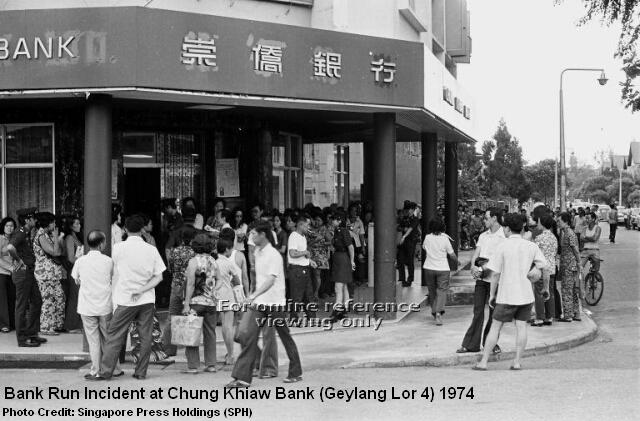
chung khiaw bank run geylang lorong 24 branch 1974
By 8pm, there were still 300 people outside Chung Khiaw Bank at Geylang Lorong 24. A Cisco van arrived at Geylang with more money after the branch manager requested a requisition of $3 million cash for further cash withdrawals. Bank officials had to constantly reassure the crowds not to panic but it was not until 1030pm before the last customer made his successful withdrawal of deposits.
The Reassurance
The following days saw Chung Khiaw Bank releasing an official statement, citing the positive financial health of the bank. With an excess of $700 million in the form of government securities, treasury bills and physical cash, and a healthy loan deposit ratio of 63%, the bank hoped to quash the rumours and convince the people of its strong liquidity position. The Monetary Authority of Singapore (MAS) also pledged that the UOB group of banks was safe and well-protected. After further appeals by the Association of Banks, Singapore Chinese Chamber of Commerce and the Singapore Bank Employees Union, the size of the crowds queuing up to withdraw their savings finally began to ease by the fourth day since the bank run incident started.
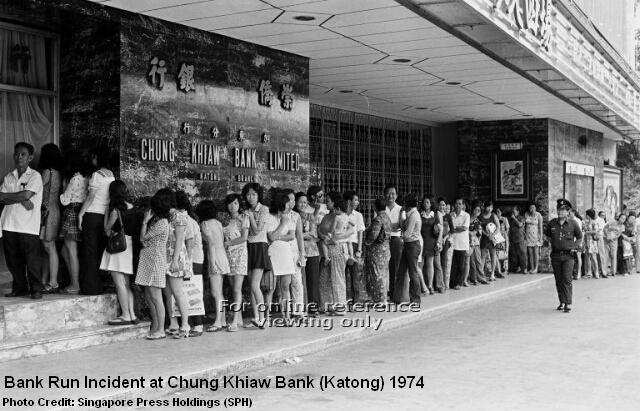
chung khiaw bank run katong branch 1974
The Establishment
Chung Khiaw Bank Limited was established in February 1950 by Aw Boon Haw (胡文虎, 1882-1954) to tap into the credit and loan sectors for businessmen of the smaller-scale companies. Aw Boon Haw, famous for his Tiger Balm ointment brand and Har Paw Villa, had a vast business empire ranging from traditional medicine and gold mining to banks and newspapers. He was also a generous philanthropist who had donated millions to charity causes.
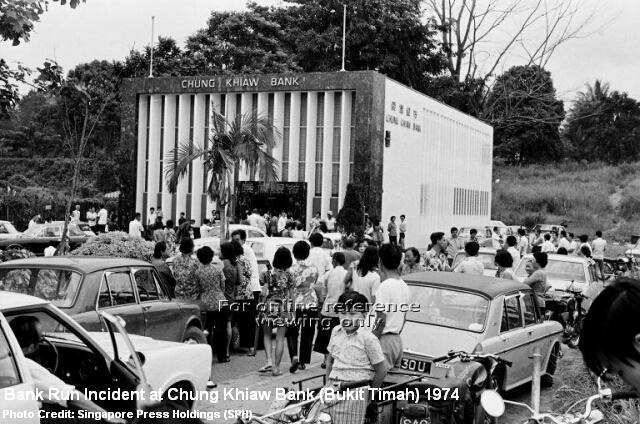
chung khiaw bank run bukit timah branch 1974
Ahead of its times, Chung Khiaw Bank was fast growing and innovative in ways and services to increase its market share in the banking sector. It managed to report a fixed asset of nearly $35 million just five years after its establishment. In 1956, it launched the “mobile bank” scheme, where its vans were deployed to different parts of Singapore to bring banking services to those in need. A valet service was also introduced at its head office at Robinson Road, so that car owners visiting the bank would not be hindered by the limited parking lots.
In the sixties, the bank rolled out their coins “piggy” banks, in shapes of different animals such as pigs, rhinos and kangaroos, which proved extremely popular among the kids. Its strategy to reach out and woo the common folks and child depositors reaped spectacular results, earning the bank with a reputation of being a “small man’s bank”. By 1970, Chung Khiaw Bank had opened as many as 32 branches in Singapore; the latest were at Toa Payoh and High Street.
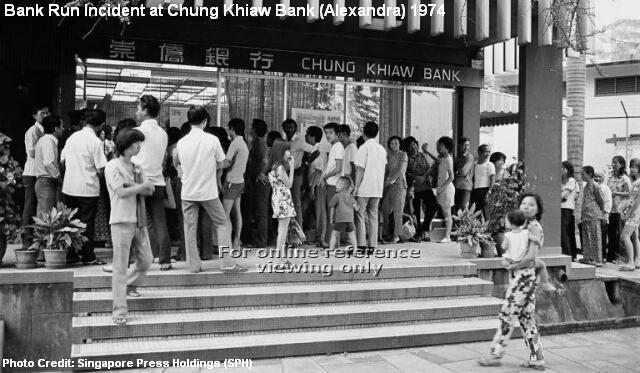
chung khiaw bank run alexandra branch 1974
The Acquisition
UOB, established since 1935, remained a relatively small player in the Asia Pacific region after Singapore’s independence. After achieving its public listing on the Singapore and Malaysian stock exchanges in 1970, UOB proceeded with a series of aggressive acquisitions. Chung Khiaw Bank was its first target. A stake in Chung Khiaw Bank was acquired in June 1971, but it would take 16 years before UOB was able to buy up all of the shares in Chung Khiaw Bank and take full control. By 1999, the brand of Chung Khiaw finally ceased to exist when its operations in Singapore, Malaysia and Hong Kong were merged into UOB.
UOB went on to acquire other local banks: Lee Wah Bank (in 1973), Far Eastern Bank (1984), Singapore’s Industrial & Commercial Bank (1987) and Overseas Union Bank (2003). Today, it is part of Singapore’s “Big Three” banks, along with DBS (The Development Bank of Singapore Limited) and OCBC (The Overseas-Chinese Banking Corporation Limited)
Published: 22 April 2014
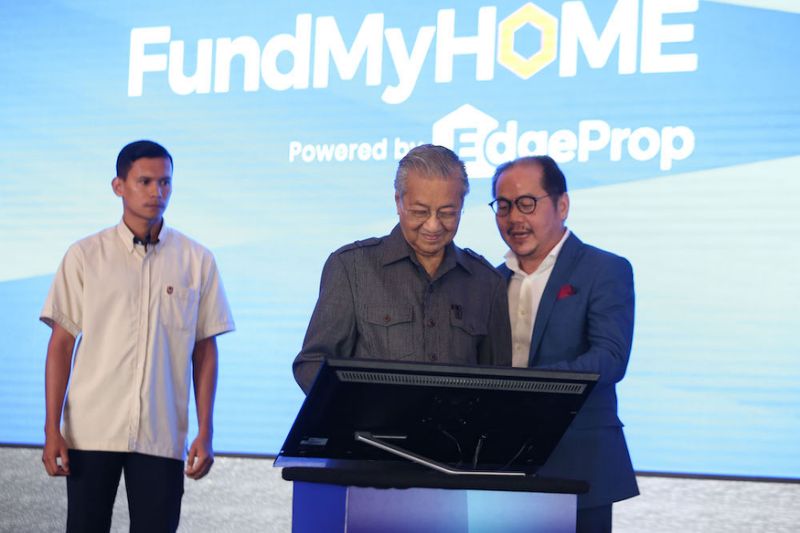
Assessing "FundMyHome" Concept


Let me say that I think the concept has a lot more merits than the current ‘reception’ is willing to give it. I am not aligned with anyone or any company dealing with this business segment.


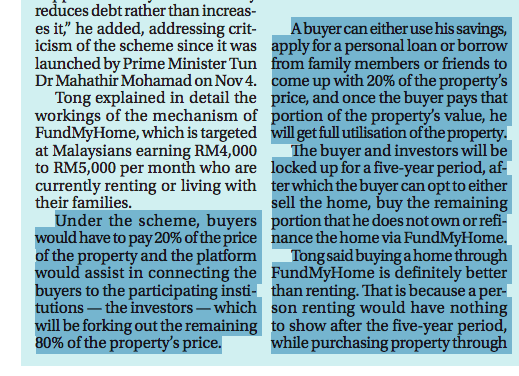
It is very important to note the group of people that the concept is targeting: FIRST HOME BUYERS. More specifically, first home buyers who are having problems buying the said property. It is not for anyone else.


Issues that I have against the concept:


a) Tough for the funders – The 5 year lockup period will actually stave off speculation or that the funders side will get a hefty return on their investment at the expense of first home buyers. In fact, in there is no interest paid to funders, its actually quite a sad deal for the funders.

The funders pay 80% of the property, for what? For a maybe/potentially/ yes-no 20% gain after 5 years. If you put your own funds in a savings account, 12-month automatic rollover, you could get 3% compounded over 5 years = 15.9%. Hence 20% versus 15.9% is nothing to shout about.

Even if you compound it at 2.5% over 5 years = 11.3%. The 20% return is not guaranteed. Funding the project also means you have to take a view on the local property market.

Developers do not get 100% of purchase price but rather just 80%. The 20% is granted to developers only if the property rises above the purchase price at the end of 5 years. Otherwise the 20% will be earning a 5% p.a. and used to protect the downside for investors.


b) Saving the developers – We know we have a lot, a bloody lot of properties that are unsold. If nothing is done, the markets will unwind itself eventually – either developer keep dropping prices till it reaches real affordability levels, or it keeps the properties on their books till the sentiment recovers or the cows come home (bankruptcy). 

The latter has the consequence of suppressing the rest of the property market in terms of prices. The sad fact is that too many Malaysian households have taken on hefty property mortgages. In a flattish or slowdown market, these households will have to crimp their spending or even sell additional properties at a loss.

The Fund My Home project will “save” many developers from “losses” as cited above or eat into their capital for having to keep the properties on their books.

They have overbuilt for sure, they have overestimated the demand and affordability, and in a neutral stance, they have to bear the downtrend and their business mistakes.

While the Fund my Home project has a lot of merits, I do not wish to see first time home buyers being too eager to snap up “substandard” properties that developers cannot sell. To a certain extent, that concern has been mitigated by the “screening process” by TheEdge team. Not all properties will be permitted on the platform.

Why protect the buyer and not the seller? Because we are not here to save the developers. As a matter of fact, we are already helping the developers to sell properties that they themselves CANNOT sell. Hence the developers should not be looking at normal profit margins (judging from the fact they made so many business mistakes such as overbuilding, overestimating demand, etc.). 

The bulk of pain has to be shouldered by the property developers, as explained above.


c) What if the buyer defaults – The developer is supposed to take back only 80% of the property price at the beginning. The remaining 20% will be kept as minimal returns for investors in the home. Hence the funders are protected even if the property were to lose 20% of its value at the end of 5 years.  

However, say within that 5 years the buyer lost his/her job and the property at the end of 5 years has a market price that is 40% below the initial entry price for the buyer? The buyer basically is bankrupt now, so at 40% loss, no party will want to sell into the market. Who bears the additional 20% losses?

d) EPF Account B – Currently Account B takes up 30% of our contributions. I assume first home buyers will be drawing down from Account B to help with the initial 20% payment. I think the government can make the exception for first home buyer to take out the full Account B plus an additional 20% from Account A (if required) for the project. Seriously, its the 20% payment that will be the biggest hurdle. Plus the same person is building equity and not speculating. Same as before, if they were to sell the property, they will have to put back the same sum back to their EPF account.


THE BENEFITS

a) First time home buyers can almost forget about owning a home on a RM4k-5k salary. Hence FundMyHome should be weighed AGAINST the alternative of renting. I need not do a Renting vs owning 101 course here to highlight the miniscule difference to participating in the program vs renting. Or do I?

Say you cannot afford the 20% down payment but you have a salary of RM4,000. The platform will help to try secure a RM100k personal loan. Say the interest payment is 7%. The person would be paying interest RM7,000 a year = RM583 a month. Assuming nothing changes, RM583 in rent cannot even get you a room at Choo Cheng Kay flats. But the family gets a house/unit all their own now.

Even if at the end of 5 years, you decide not to take up up the remainder, you can still sell your 20%, assuming market was flat, and get out. But you got a silly RM375 rental a month for a nice home for 5 years.


b) Catch up – The worst thing for first home buyers is not being to catch up to the property prices. Imagine waiting for your household income to jump from RM5k to RM10k a month. Maybe it will take 5 years but where will property prices be then. Your RM400,000 unit may now be at RM550,000.

You can do the math yourself that you have bought insurance for your affordability. Giving up the initial 20% is not such a big deal, as I have explained that the funder’s side have their risks and rewards to be weighed out as well. In this case you are giving up RM80,000 gains and could refinance for the whole unit/house for RM400,000 – RM80,000 (initial payment) + RM80,000 (funders’ returns) = RM400,000. 

You will be financing a mortgage of RM400,000 at the end of 5 years for a property that is worth RM550,000. Giving you an equity of RM150,000 already.


c) EPF Account B – After 5 years, the same person with RM4k salary, assuming no increase, would have saved 11% +13% (contribution) = 24% of RM4,000 x 12 x 5 = RM57,600. Thirty percent would have gone to Account B for housing = RM17,280. That amount could be used to pay down further or refinance purposes. 

We should allow another 20% from Account A for this purpose, which would have made for a total of RM28,800 at his disposal. 


MY VIEW

Overall a brilliant idea that tries to balance the risk-return for the interested parties. 

 If the team stay vigilant on the screening process of properties allowed to be on the platform – this will succeed wildly. This proposal should get full support from the government, and property developers should be thankful. Those making noises are those overpricing their substandard properties and probably lamenting why they cannot get on the platform.

Stan The Man


Let me state first that I am not a big comic book person. Like it or not, all of us grew up pretending every now and then to be Spiderman, and later The Fantastic Four and X-Men. I also really liked Black Panther, needless to say.


I hope what’s not lost amidst the accolades of the comic book guru was his strong stance against racism and discrimination. That to me was very pleasing to know and added loads of character and integrity to his achievement.

Below were some quotes by Stan Lee throughout the ages.


‘If we could only learn that the world is big enough for all of us …’


In 1968, the year Dr. Martin Luther King Jr. and Robert F. Kennedy were assassinated, Lee wrote: “Let’s lay it right on the line. Racism and bigotry are among the deadliest social ills plaguing the world today. But, unlike a team of costumed supervillains, they can’t be halted with a punch in the snoot or a zap from a ray gun. The only way to destroy them, is to expose them – to reveal for the insidious evil they really are.   Now, we’re not trying to say it’s unreasonable for one human being to bug another. But, although anyone has the right to dislike another individual, it’s totally irrational, patently insane to condemn an entire race—to despise an entire nation—to vilify an entire religion. Sooner or later, we must learn to judge each other on our own merits. Sooner or later, if man is ever to be worthy of his destiny, we must fill out hearts with tolerance. For then, and only then, will we be truly worthy of the concept that man was created in the image of God–a God who calls us ALL—His children.”


“The bigot is an unreasoning hater – one who hates blindly, fanatically, indiscriminately … He hates people he’s never seen – people he’s never known – with equal intensity – with equal venom … It’s totally irrational, patently insane to condemn an entire race – to despise an entire nation – to vilify an entire religion,” Lee added at the time. 


During a 1971 interview with Rolling Stone,  Lee said: “I think the only message I have ever tried to get across is for Christsake, don’t be bigoted. Don’t be intolerant. If you’re a radical, don’t think that all of the conservatives have horns … I think most people want the same thing. They want to live a happy family life, they want to be at peace, they want no physical violence, nobody to hurt them, and they want the good things that life has to offer. But I think everybody sees us reaching that nirvana by a different path.” 


In the same 1971 interview, Lee added: “I think one of the terrible things in the world is that we are so inclined to think in black and white, hero and villain, good and bad, if you don’t agree with me I’ve got to destroy you. If we could only learn that the world is big enough for all of us. For a guy who wants to wear his hair long, and a guy who wants to be a skinhead. Neither of ’em has to be bad.”


During an interview in 2016, Lee said: “America is made of different races and different religions, but [that] we’re all co-travelers on the spaceship Earth and must respect and help each other along the way.”

Mr. Sachs, Show Me MY Money


We tend to take things for granted very easily. With what we know as of today, just imagine if we did not change the government back in May. Many dastardly shenanigans would have continued, the degenerates would have continued merrily stuffing their pockets, the skimming and shaving and loading would have continued unabated.

Plus its not just financial crimes. If anyone stood in their way, things would kautim-ed one way or another, by hook AND crook. Planted evidence, unnecessary audits, the taxman cometh … or let’s take a trip to Kajang.

So, it is in this light that our Finance Minister is asking back the fees paid to Goldman Sachs. It is also good to see the share price of Goldman Sachs being “sold down” in light of the 1MDB issue.


We are ‘lucky’ in that the 1MDB fiasco was big enough to make a dent to the behemoth that is GS. Can you imagine if our “losses” were minuscule compared to their market capitalization, reputation, integrity, profits??!! Then 1MDB might not have mattered to them and their shareholders.

Going down 7.2% in a single day is a big deal. Its market cap is around $76bn, a 7.2% drop meant in one day it has lost $5.5bn (RM22.7bn). To put that in perspective: …the $6.5 billion it raised in 2012 and 2013. Goldman Sachs handled the deals, reaping almost $600 million in fees.

Anyone can see that IT WILL BE CHEAPER TO JUST GIVE US BACK THE FEES. Rich people are not stupid, especially when the figures are staring like that in their faces.

So was what GS did so bad?

Answer: YES, YES …

a) the corrupt who has the power can only do so much… they need “ideas”, shortcuts, devious means and ways to “get the deal done” … hence the enablers of a crime/CBT should be punished as well

b) GS cannot say they did not know… they knew, otherwise who will pay such exorbitant fees for a simple bond issue… Malaysia is not a third or fourth world country .. the bond rates and fees charged were nothing short of being exorbitant and repulsive

c) Big banks were fined royally for pushing toxic products, and/or money laundering … this is worse, being complicit and enabling corrupt politicians and influencers to pillage and burn.


Losing $5bn in market cap (with more to come) … or pay us back $600m, and I am certain Malaysia can sue for at least another $2-4bn for collateral damages, punitive damages, etc…

Malaysians continue to be foolish

Image result for images of waiting to die
Before GE14 our national debt stood at RM1.38 trillion.
After GE14 till today our national debt shot up to RM2.2 trillion.
In 6 months time our debt is expected to rise to RM3 trillion if there is no more stealing by you know who.

Yet many continue to sing praise to Demi God Mahathir.

There are 4 million Malaysians in the category B40.
While 2 million Malaysians are in M40.
In 6 months time there will be an increase of 2 million to the 4 million making it 6 million in B40.
And another increase of 2 million to be added to the already 2 million making it 4 million in M40.
Thanks to another stupid scheme FundMyHome  2 million Malaysians will not be able to service their loan  during the five years period pushing them to category B40. Good example is PTPTN loan.  How many people paid back?
]
Oil prices have come down to RM60 but our fuel is going up.  What the fuck is the government doing?

During Najib’s time our ringgit against US$ was 3.8 today under Mahathir it is at 4.2.

People are claiming Demi God Mahathir can bring back the glorified days of yesterday to Malaysia but what many do not realised is that the old magic wand is today broken into pieces.

Mahathir, Daim and Azmin Ali have been going around begging for loans, selling bonds etc and the response has been NIL except for Japan.  In return there will be not 1 but 3 Japanese school by 2020.  But this will not solve our national debt.  How many Malaysians will be employed in the Japanese school?

Migrate population stand at 6.8 million and every month millions of ringgit are transferred out.  PH government has not taken any serious action to get rid of them.

Mahathir and Daim are being punished for their past action now, so whatever they want to do for their legacy no longer work.

Azmin Ali had never been able to bring in investment during his time as Menteri Besar of Selangor and today has proven once again he is not capable as an Economic Minister.

LGE cannot do anything because his job is to make the accounts pretty,plus he is already a billionaire.

Those loudspeakers before GE14 who demanded and protested for accountability and transparency are today quiet as a mouse because Mahathir and Daim have given them position.

Meanwhile Malaysians continue to enjoy without care leaving the nation to incapable leaders who have ego like their overworked penis.

Whole world using GST, only Malaysia going backwards

I support GST because everyone has to pay.
In SST, the malays and millionaire don’t pay.
So Malaysia is back to square one where the minority have to pay taxes to support the majority.
I find this very frustrating and unfair to the minority in Malaysia.
***********************************************************

‘GST a good tax but ruined by poor implementation’ – MoF deputy undersecretary

Koh Jun Lin  |  Published:   |  Modified: 

This cannot that cannot but Azmin and Zuraida can

Azmin and Zuraida can go to Sarawak during PKR election.
Kak Wan and Anwar cannot go to Sarawak during PKR election.
Azmin and Zuraida can have sponsors like Vincent Tan, Naza, Genting, Toto and Eco World to bribe PKR voters.
Rafizi cannot have sponsors to bribe PKR voters.
Azmin and Zuraida sent thugs to create trouble at polling centers.
Rafizi cannot have thugs at polling centers.
I find it odd that many bloggers, gossipers, trouble makers, facebook lovers and liars saying it is okay for Azmin and Zuraida to do whatever they like and how they like since they have great sponsors and backers like Mahathir and Daim who created a loss of RM66 billion in Bank Negara just after GE14.
BUT WHEN IT COMES TO ANWAR, KAK WAN AND RAFIZI EVERYTHING IS NO, NO.
By the way when will Latheefa who is double spy for Daim  be kicked out from PKR.
She has caused tremendous trouble and divided the members into camp inside PKR when Anwar was in jail for the second time yet no one dares to touch her.
ME THINK IT IS HIGH TIME SHE IS SHOWN THE DOOR.
https://www.freemalaysiatoday.com/category/nation/2018/11/07/azmin-claims-to-be-in-the-dark-over-wan-azizahs-visit-to-pkr-julau/
Image result for images of azmin and zuraida

Pribumi Ministers have carrot brain

Image result for images of carrot brain
Maszlee is definitely not a wise choice as a Minister.
He is like a LOSER in a game of snake and ladder who depends on the dice for every move to reach his destination. Each time he almost reaches the finishing line, he dives straight back to the beginning. Till today he does not know what he is supposed to focus on neither does he understand how bad our Education system is. What needs to be done immediately.

Malaysians changed the Government to have a more liberal environment.  Improvement on our life.  The demand is simply NO MORE RACIAL THINKING, NO DIVISION ON OUR LIFE, BETTER EDUCATION AND WELL RUN SYSTEM IN OUR DAILY LIFE.

Just one trip to Japan, Maszlee now wants to introduce Breakfast for B40 students only.  Again a division class of people. Does Maszlee really understand why the Japanese Government introduced lunches.

The Japanese Government unlike our Minister who love to syiok sendiri does things for the development of the nation.  The Japanese are far sighted. Maszlee just wants to give good impression his carrot brain is working and hopefully a title is coming his way.

Pribumi people like Syed, Rani, Mukhriz and Maszlee are not Minister material.  These carrot cake are show case model to SYIOK SENDIRI BERHAD.
*****************************************************************

Kyushoku – Japanese School Lunch

On October 13, Gohan Society paid a Midtown visit to the Nichibei Exchange group to listen to a presentation by Ms. Alexis Agliano Sanborn, one of The Gohan Society’s fantastic volunteers, about the Japanese school lunch system. Wait, school lunch? You mean that nasty stuff kids are forced to eat in school? Actually, Japan’s school lunch is quite the national treasure – and it tastes good to boot!
Even those well-versed in Japanese food and culture often overlook the charm and insight to the country’s institutional meal system. For those Americans among us, school lunch does not usually yield positive memories or connotations. Many of Japan’s baby boomer generation would agree! They associate their lunch time with memories of powdered milk and flavorless bread. However, most Japanese kids today are blessed with healthy, fresh, flavorful and well-balanced daily meals.
Currently, school lunch, or (gakkoukyushoku, is a public system in place at 92% of elementary and middle schools around the country. It is maintained locally but governed nationally, influential in the regional economy and society.
As Ms. Sanborn noted, school lunch has had a long history in Japan. The country boasts one of the oldest school lunch systems in the world, beginning in response to a poor economy, stressors of modernization and natural disasters of the late 1880s and 1890s. School lunch’s early advent is thanks to Japan’s communal spirit and modernization efforts, spurring a movement for youth to be reared healthy and capable.
In the postwar, the piecemeal system was transformed by the influence of America – and the lunch-lineup heavily adopted Western flavors. While the flavors and taste may have suffered throughout the 1950s and ‘60s as Japanese chefs grappled with a clash of cultures, strong systemic foundations were erected.
Systemic foundations? What does that mean? Well, simply put, the local and national government helped to establish the operational rules and guidelines that over the years have contributed to school lunch’s resounding success. Sounds confusing, but really it’s quite simple. Beginning in the 1950s, the Japanese government decided to structure the system in a uniquely Japanese way. It took elements from its own culture – the ideas of group labor, perseverance, endurance, cleanliness, humility, gratitude and comradery – and encapsulated them into a daily ritual. This ritual was to become the school lunch system, one that heavily relies on student participation as its key to success.
Students are expected to participate and engage in practically every aspect of the meal – that is, besides making the food themselves (although, from time to time they do that too!). Every day right before the lunch hour, students dutifully don masks and aprons, clean the classroom floors, rearrange the desks, transport food from the kitchen, judiciously measure and serve, and then carefully clean. Over the years these daily formalities instill all manner of manners! For example, children learn to extend and appreciate the efforts of the meal’s benefactors (i.e., the lunch ladies). Other lessons include understanding the importance of cleanliness, sense of community and society, strength, justice, and morality. Heavy stuff for lunch time.
During a brief video which followed the school lunch process from start to finish, many of the Americans were amazed by the diligence, care and manners instilled in these children through the daily process. As one commentator put it, “Everything about Japanese society you can see through lunch.” It’s true!
What about the food then? Well, despite the blips and burps of the 1950s and 1960s, the food scene really began to take off in the seventies and has had a recent renaissance in the 2000s. Gone away are the processed and canned foods. Today, most schools have their meals prepared fresh daily– even down to chopping the vegetables. As for the menu, although bread used to be the principle staple in the days of yesteryear, today rice is definitively served at least three times a week. For the Japanese school lunch has become a vehicle through which to experience elements of the world around them – from the global to the local. Children learn about the principles of washoku as well as the various types of yoshoku, and international foods from across Asia. By utilizing local sourced ingredients and specialties, children also learn about the local food economy, as well as the seasonal ebbs and flows which have defined the Japanese culture for millennia.
All in all, the presentation showed us that there is a lot more to Japanese school lunch that meets the eye.
Alexis Agliano Sanborn researched the Japanese school lunch as her Master’s thesis at Harvard University (2013), and currently is developing a school lunch cook book proposal to submit to publishers. Meanwhile, she is also developing her school lunch webpage.

Bohemian Rhapsody – Review & Personal Notes


Movie Review: It is terribly unfair with all the hype surrounding the movie prior to its release. Expectations were high. If you don’t know Queen or just a so-so fan, this movie would still rate 9/10. If you are a true blue Queen fan, its way off the charts fantastic.

One thing is clear, Rami Malek will be a shoo-in to win next March Best Actor Oscar. He was so good. You can have voice training and even movement coaches, but you still need to have the ability to assimilate and interpret. After 10 minutes you feel you were watching Mercury.

To be fair, there were some minor tweaks to the real truth (such as how Mercury became the band’s singer, etc.), and the focus on the Live Aid concert as the “grand finale”. But movie producers need an entertaining movie.

Its a riveting portrayal by Rami Malek, and he did not overdo it. If you were a Queen fan, you’d be amazed at the similarities in expressions and mannerisms. 

The movie uses Bohemian Rhapsody as the anchor as to how it came about and how it conquered the world – but till today most people still have a vague understanding of the lyrics. 

There were incredible moments: when the fans sang back Love of My Life to the band; when Freddie composed the first few lines of the song; when Freddie wrote the first few lines of BH and cried; the sheer amount of love and respect Freddie showed to Mary; etc…

There were no dull moments in the movie, and the selection of songs to be played was well thought out and appropriate. The best thing about the movie was how much more we could see things from Mercury’s perspective, in trying to understand his inner demons and unabashed brilliance.

There will be plenty of mediocre reviews by critics because it was not savage enough, or too entertaining, or glossing over facts … That’s all good, this was not meant to be a real biopic but rather a tribute to Mercury and Queen, where we can get to know both much better.

And just like Queen, … having fun is paramount, which was what the movie did.


/>


Why Queen Is My Favourite Musical Artiste

I started to listen to Queen thanks to a friend who so kindly recorded the 3rd album Sheer Heart Attack on a wonderful cartridge for me. It was so good, I looked for their earlier albums, Queen 1 and Queen 2. Then came NATO (our fanboys favorite way to refer to A Night At The Opera).

They were not the conventional rock band. They love to evolve and do different things. They were not shy of composing melodies and catchy hooks for rock songs. Plus they have a keen eye for harmonies, for a rock band, that was prissy. They also had no problem embracing technology and did not put rock and roll into a box but rather their music had none of the usual boundaries.

Musicality, Brian May was superb as their lead guitarist and a great composer. May and Roger Taylor’s drums were largely responsible for Queen’s sound. Roger is a very decent drummer and an even better high pitched harmony singer. Mercury was mercurial, a great composer and his voice was unique and wide-ranging.

My favorite albums in order of preference:

1.  Sheer Heart Attack
2.  Night At The Opera
3.  News of The World
4.  Jazz
5.  Day At The Races
6.  Queen II


I was fortunate enough to catch Queen live back in 86 or 87 in Sydney with Mercury still delivering the goods. Its the only concert where I could be seen singing to every bloody song. It was magical and satisfying.


What about the songs? Here is my recommended list of lesser-known ones, if you haven’t heard most of Queen (just go to You Tube):

a)  Brighton Rock – a brilliant catchy rock number with possibly the best guitar solo by Brian May in the middle, play it loud.

b) In The Laps Of The God – An eerie, hymn-like, religious chant that is very melodious. Great harmonies. Listen to Roger Taylor’s ethereal soaring harmonies. The song comes in 2 parts.. its the beginning of the inclusion of long play-operatic songs which led to BR.

c) Mustafa/Teo Torriatte – An throwback to Mercury’s Persian/Zanzibar roots. Brave and bold. Plus a Japanese song that could have easily be the theme song for a Japan Olympics.


d) Fat Bottomed Girls – I had the huge poster of naked gals riding bicycles from the album. It was so wild.

e) Good Old Fashioned Lover Boy/ Bring Back That Leroy Brown – In their early records, they always insert some sort of vaudeville-like song. Versatility at its best.

br />
b

br />

Design a site like this with WordPress.com
Get started